Helicopter Emergencies & Hazards
Learn helicopter emergencies and hazards for helicopter operations, including the procedures, techniques, hazards, and decision-making guidance presented in the FAA Helicopter Flying Handbook.
Introduction
- Today, helicopters are quite reliable.
- However, emergencies do occur, whether a result of mechanical failure or error, and should be anticipated.
- Regardless of the cause, recovery needs to be quick and precise.
- By having a knowledge of the helicopter and its systems, a pilot is to handle the situation more readily.
- Helicopter emergencies and the proper recovery procedures should be discussed when possible, practiced in flight.
- In addition, by the conditions that can lead to an emergency, many accidents can be avoided. pilot the thorough able and, knowing potential
- Reinforce your understanding of Helicopter Emergencies & Hazards by reviewing the key concepts on this page before moving on.
Autorotation
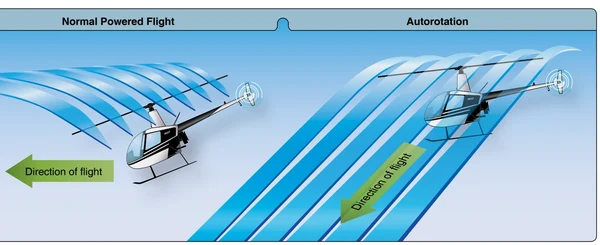
- In a helicopter, an autorotative descent is a power-off maneuver in which the engine is disengaged from the of main rotor disk and the rotor blades are driven solely by the upward flow of air through the rotor.
- [] In other words, the engine is no longer supplying power to the main rotor.
- The most common reason for an autorotation is failure of the engine or drive line, but autorotation may also be performed in the event of a complete tail rotor failure, since there is virtually no torque produced in an autorotation.
- In both of cases, maintenance has often been a contributing factor to the failure.
- Engine failures are also caused by fuel contamination or exhaustion as well resulting in a forced autorotation. to If the engine fails, the freewheeling unit automatically disengages the engine from the main rotor, allowing it to rotate freely.
- Essentially, the freewheeling unit disengages anytime the engine revolutions per minute (rpm) is less than the rotor rpm. at At the instant of engine failure, the main rotor blades are producing lift and thrust from their angle of attack (AOA) 7, and velocity.
- By lowering the collective (which must be done immediately in case of an engine failure), lift and drag are reduced, and the helicopter begins an immediate descent, at thus producing an upward flow of air through the rotor disk.
- This upward flow of air through the rotor disk provides sufficient thrust to maintain rotor rpm throughout the descent.
- Since the tail rotor is driven by the main rotor transmission during autorotation, heading control is maintained with the antitorque pedals as in normal flight. to Several factors affect the rate of descent in autorotation: bank angle, density altitude, gross weight, rotor rpm, trim condition, and airspeed.
- The primary ways to control the rate descent are with airspeed and rotor rpm. Higher or lower airspeed is obtained with the cyclic pitch control just as in normal powered flight.
- In theory, a pilot has a choice in the angle of descent, varying, from straight vertical to maximum horizontal range (which is the minimum angle of descent).
- Rate of descent is high at zero airspeed and decreases to a minimum at approximately 50-60 knots, depending upon the particular helicopter and the factors just mentioned.
- As the airspeed increases beyond that which gives minimum rate descent, the rate of descent increases again.
- When landing from an autorotation, the only energy available arrest the descent rate and ensure a soft landing is the kinetic energy stored in the rotor blades.
- Tip weights can greatly increase this stored energy.
- A greater amount of rotor energy is required to stop a helicopter with a high rate of descent than is required to stop a helicopter that is descending more slowly.
- Therefore, autorotative descents very low or very high airspeeds are more critical than those performed at the minimum rate of descent airspeed.
- Refer to the height/velocity diagram discussion in Chapter Helicopter Performance.
- Each type of helicopter has a specific airspeed and rotor rpm which a power-off glide is most efficient.
- The specific airspeed is somewhat different for each type of helicopter, but certain factors affect all configurations in the same manner.
- In general, rotor rpm maintained in the low green area (see Figure 5-3 ) gives more distance in an autorotation.
- Heavier helicopter weights may require more collective to control rotor rpm. Some helicopters need slight adjustments minimum rotor rpm settings for winter versus summer conditions, and high altitude versus sea level flights. specific autorotation airspeed and rotor rpm combinations a particular helicopter, refer to the Rotorcraft Flight (RFM).
- The specific airspeed and rotor rpm for autorotation is established for each type of helicopter based on weather, calm wind conditions, and normal loading. the helicopter is operated with heavy loads in high altitude or gusty wind conditions, best performance achieved from a slightly increased airspeed in the For autorotation at low density altitude and light best performance is achieved from a slight decrease normal airspeed.
- Following this general procedure of airspeed and rotor rpm to existing conditions, a pilot achieve approximately the same glide angle in any circumstances, and thereby estimate the touchdown accurately.
- It is important that pilots experience autorotations various airspeeds.
- This provides better understanding the necessary flight control inputs to achieve the airspeed, rotor rpm and autorotation performance, as the maximum glide or minimum descent airspeed. decision to use the appropriate airspeed and rotor rpm the given conditions should be instinctive to reach a landing area.
- The helicopter glide ratio is much less that of a fixed-wing aircraft and takes some getting used The flare to land at 80 knots indicated airspeed (KIAS) be significantly greater than that from 55 KIAS.
- Rotor control is critical at these points to ensure adequate energy for cushioning the landing.
- Use collective pitch control to manage rotor rpm. If rotor builds too high during an autorotation, raise the collective sufficiently to decrease rpm back to the normal range, then reduce the collective to maintain proper rotor If the collective increase is held too long, the rotor rpm decay rapidly.
- The pilot would have to lower the collective in order to regain rotor rpm. If the rpm begins decreasing, the pilot must again lower the collective.
- Always keep rotor rpm within the established recommended range for helicopter being flown.
RPM Control
- Rotor rpm in low inertia rotor systems has been in simulator flight evaluations which indicate that simultaneous application of aft cyclic, down collective, and alignment with the relative wind (trim) at a wide of airspeeds, including cruise airspeeds, is critical for operations during the entry of an autorotation.
- The applicable Rotorcraft Flight Manual (RFM) should be consulted determine the appropriate procedure(s) for safely entering autorotation.
- This is vitally important since the procedure(s) for safely entering an autorotation may vary with makes and/or models of helicopters.
- A basic discussion For the aerodynamics and control inputs for single rotor systems for is in order here.
- Manual Helicopter pilots must understand the use of the collective average for rotor rpm control during power off autorotations in a turn.
- When Upward movement of the collective reduces the rpm and density downward movement increases the rpm. Cyclic movement is is primarily associated with attitude/airspeed control in descent. powered flight but may not be given the credit appropriate loading, for rotor rpm control during practice and emergency power in off autorotations.
- As long as the line of cyclic movement is fitting parallel with the flight path of the helicopter (trimmed), the can aft movement of the cyclic also creates greater air flow up set of through the bottom of the rotor disk and contributes to an point increase in rotor rpm. If the flight path is 10 degrees to the right of the longitudinal axis of the helicopter, theoretically, the cyclic should be moved 10 degrees aft and left of the from longitudinal axis to get maximum air up through the rotor of system. desired such As the pilot lowers the collective in reaction to a loss of The power during cruise flight there may be a tendency for the for nose of the helicopter to pitch down.
- As a result, the pilot may suitable tend to lean forward slightly, which delays the application than of simultaneous aft cyclic to prevent the pitch change and to. associated loss of rotor rpm. A slight gain in altitude at cruise will airspeed during the power off entry into an autorotation rpm should not be of great concern as is the case for the execution rotor of practice or actual quick stops.
- Various accident investigations have concluded that, when rpm faced with a real power failure at cruise airspeed, pilots are not simultaneously applying down collective, aft cyclic, and operating antitorque pedal inputs in a timely manner.
- Low inertia rotor rpm. systems store less kinetic energy during autorotation and, as may a result, rotor rpm decays rapidly during deceleration and touchdown.
- Conversely, less energy is required to regain safe rotor rpm during autorotation entry and autorotative the descent.
- The pilot should immediately apply simultaneous the down collective, aft cyclic and trim the helicopter for entry into an autorotation initiated at cruise airspeed.
- If rotor rpm has been allowed to decrease, or has inadvertently decreased below acceptable limits, an application of aft cyclic may help rebuild rotor rpm. This application of aft cyclic must studied be made at least at a moderate rate and may be combined the with a turn, either left or right, to increase airflow through the rotor system.
- This will work to increase rotor rpm. Care range should be maintained to not over-speed the rotor system as all this is attempted. to an
Risk Management during Autorotation Training
- The following sections describe enhanced guidelines for specific autorotations during rotorcraft/helicopter flight training, of as stated in Advisory Circular (AC) 61-140.
- There are risks inherent in performing autorotations in the training environment, and in particular the 180-degree autorotation.
- This section describes an acceptable means, but not the only means, of training applicants for a rotorcraft/helicopter airman certificate to meet the qualifications for various rotorcraft/helicopter ratings.
- You may use alternate methods for training if you establish that those methods meet the requirements of the Helicopter Flying Handbook (HFH), FAA practical test standards (PTS), and the Rotorcraft Flight Manual (RFM).
Straight-In Autorotation
- A straight-in autorotation is one made from altitude with no turns.
- Winds have a great effect on an autorotation.
- Strong headwinds cause the glide angle to be steeper due to the slower groundspeed.
- For example, if the helicopter is maintaining 60 KIAS and the wind speed is 15 knots, then the groundspeed is 45 knots.
- The angle of descent will be much steeper, although the rate of descent remains the same.
- The speed at touchdown and the resulting ground run depend on the groundspeed and amount of deceleration.
- The a greater the degree of deceleration, or flare, and the longer to it is held, the slower the touchdown speed and the shorter the ground run.
- Caution must be exercised at this point as the tail rotor will be the component of the helicopter closest to the ground.
- If timing is not correct and a landing attitude not set at the appropriate time, the tail rotor may contact the ground causing a forward pitching moment of the nose and possible damage to the helicopter.
- A headwind is a contributing factor in accomplishing a slow touchdown from an autorotative descent and reduces the amount of deceleration required.
- The lower the speed desired at touchdown, the more accurate the timing and speed of the flare must be, especially in helicopters with low-inertia rotor disks.
- If too much collective is applied too early during the final stages of the autorotation, the kinetic energy may be depleted, resulting in little or no cushioning effect available.
- This could result in a hard landing with corresponding damage to the helicopter.
- It is generally better practice to accept more ground run than a harder landing with minimal in groundspeed.
- As proficiency increases, the amount of ground run may be reduced.
- Refer to [] (position 1).
- From level flight at the appropriate airspeed (cruise or the manufacturer's recommended airspeed), 500-700 feet above ground level (AGL), and heading into the wind, smoothly but firmly lower the collective to the full down position.
- Use aft cyclic to prevent a nose low attitude while maintaining rotor rpm in the green arc with collective.
- If the collective is in the full down position, the rotor rpm is then being controlled by the mechanical pitch stops.
- During maintenance, the rotor stops must be set to allow minimum autorotational rpm with light loading.
- This means that collective will still be able be reduced even under conditions of extreme reduction of vertical loading (e.g., very low helicopter weight, at very lowdensity altitude).
- After entering an autorotation, collective pitch must be adjusted to maintain the desired rotor rpm.
- Coordinate the collective movement with proper antitorque pedal for trim, and apply cyclic control to maintain proper airspeed.
- Once the collective is fully lowered, decrease throttle to ensure a clean split/separation of the needles.
- This means that the rotor rpm increases to a rate higher than that of the engine - a clear indication that the freewheeling unit has allowed the engine to disconnect.
- After splitting the needles, readjust the throttle to keep engine rpm above normal idling speed, but not high enough to cause rejoining of the needles.
- See the RFM for the manufacturer's recommendations for autorotation rate of descent.
- At position 2, adjust attitude with cyclic to obtain the manufacturer's recommended autorotation (or best gliding) speed.
- Adjust collective as necessary to maintain rotor rpm the lower part of the green arc (see page 11-2).
- Aft cyclic movements cause an increase in rotor rpm, which is then controlled by a small increase in collective.
- Avoid a large collective increase, which results in a rapid decay of rotor rpm, and leads to "chasing the rpm." Avoid looking straight down in front of the aircraft.
- Continually crosscheck attitude, trim, rotor rpm, and airspeed.
- At the altitude recommended by the manufacturer (position 3), begin the flare with aft cyclic to reduce forward airspeed and decrease the rate of descent.
- Maintain heading with the antitorque pedals.
- During the flare, maintain rotor rpm in the green range.
- During the flare, care must be taken not to move the cyclic rearward so rapidly that the helicopter climbs or so slowly that the descent is not arrested. most helicopters, the proper flare attitude is that resulting groundspeed of a slow run.
- When forward motion decreases to the desired groundspeed - usually the lowest speed (position 4) - move the cyclic forward to place helicopter in the proper attitude for landing.
- This action gives the student an idea of airframe attitude avoid, because a pilot should never allow ground unless the helicopter is more nose-low than that Limiting the flare to that attitude may result in slightly touchdown speeds but will eliminate the possibility of rotor impact on level surfaces.
- The landing gear height at this time should be approximately 3-15 feet AGL, depending on the altitude recommended the manufacturer.
- As the apparent groundspeed and decrease, the helicopter must be returned to a more attitude for touchdown by applying forward cyclic. helicopters can be landed on the heels in a slightly nose attitude to help decrease the forward groundspeed, others must land skids or landing gear level, in order to the landing loads equally to all of the landing gear. caution should be used to avoid an excessive nose high tail low attitude below 10 feet.
- The helicopter must be to the landing attitude to keep the tail rotor from contacting the surface.
- At this point, if a full touchdown landing is to be performed, allow the helicopter to descend vertically (position 5). collective application uses some of the kinetic energy rotor disk to help slow the descent rate of the helicopter.
- When the collective is raised, the opposite antitorque used in powered flight will be needed due to the within the transmission/drive train.
- Touch down in a flight attitude.
- Control response with increased pitch angles will be different than normal.
- With a decrease in main rotor the antitorque authority is reduced (the pedals react slowly), requiring larger control inputs to maintain at touchdown.
- Some helicopters, such as the Schweitzer 300, have a tail stabilizer.
- With a canted stabilizer, it is crucial that pilot apply the appropriate pedal input at all times during autorotation.
- If not the tailboom tends to swing to the which allows the canted stabilizer to raise the tail.
- This be result in a severe nose tuck which is quickly corrected with abruptly right pedal application. that it A power recovery can be made during training in lieu of a full In touchdown landing.
- Refer to the section on power recovery in a for the correct technique. possible After the helicopter has come to a complete stop after the touchdown, lower the collective pitch to the full-down position.
- Do not try to stop the forward ground run with aft cyclic, as the main rotor blades can strike the tail boom.
- By to lowering the collective slightly during the ground run, an contact increase in weight is placed on the landing carriage, slowing attitude. the helicopter; however, this is dependent on the condition faster of the landing surface. tail One common error is the holding of the helicopter off the surface, versus cushioning it onto the surface during an autorotation.
- Holding the helicopter in the air by using all of by the rotor rpm kinetic energy usually causes the helicopter to altitude have a hard landing, which results in the blades flexing down level and contacting the tail boom.
- The rotor rpm should be used Some to cushion the helicopter on to the surface for a controlled, high smooth landing instead of allowing the helicopter to drop whereas the last few inches. spread Extreme and 1.
- Not understanding the importance of an immediate close entry into autorotation upon powerplant or driveline failure.
- 2.
- Failing to use sufficient antitorque pedal when power is reduced.
- This 3.
- Lowering the nose too abruptly when power is in the reduced, thus placing the helicopter in a dive.
- 4.
- Failing to maintain proper rotor rpm during the pedal descent. friction level 5.
- Applying up-collective pitch at an excessive altitude, resulting in a hard landing, loss of heading control, and possible damage to the tail rotor and main rotor slightly blade stops. rpm, 6.
- Failing to level the helicopter or achieve the more manufacturers preferred landing attitude. heading 7.
- Failing to minimize or eliminate lateral movement during ground contact. (Similar for items 8 and 9) canted 8.
- Failing to maintain ground track in the air and keeping the the landing gear aligned with the direction of travel the during touchdown and ground contact. right, 9.
- Failing (in a practice run) to go around if not within can limits and specified criteria for safe autorotation.
Autorotation with Turns
- Turns (or a series of turns) can be made during autorotation to facilitate landing into the wind or avoiding obstacles.
- Turns during autorotation should be made early so that the to remainder of the autorotation is flown identically to a straightin autorotation.
- The most common turns in an autorotation are 90 degrees and 180 degrees.
- The following technique describes an autorotation with a 180-degree turn.
- The pilot establishes the aircraft on a downwind heading as at the recommended airspeed, and parallel to the intended touchdown point.
- Then, taking the wind into account, the pilot establishes the ground track approximately 200 feet laterally if from the desired course line to the touchdown point.
- In strong It crosswind conditions, the pilot should be prepared to adjust the downwind leg closer or farther out, as appropriate.
- The pilot uses the autorotation entry airspeed recommended by the RFM.
- When abeam the intended touchdown point, the pilot smoothly reduces collective, then reduces power to the engine to show a split between the rotor rpm and engine rpm and simultaneously applies appropriate anti-torque pedal and cyclic to maintain proper attitude/airspeed.
- Throughout the autorotation, the pilot should continually crosscheck the helicopter's attitude, rotor rpm, airspeed, and verify that the helicopter is in trim (centered trim ball).
- After the descent and autorotation airspeed is established, the pilot initiates the 180-degree turn.
- For training operations, initially roll into a bank of at least 30 degrees, but no more than 60 degrees.
- It is important to maintain the proper be airspeed, rotor rpm, and trim (centered trim ball) throughout the turn.
- Changes in the helicopter's attitude and the angle of bank causes a corresponding change in rotor rpm within normal limits.
- Do not allow the nose to pitch up or down excessively during the maneuver, as it may cause undesirable rotor rpm excursions.
- Pitot-static airspeed indications may be unreliable or lag during an autorotational turn.
- The pilot should exercise caution to avoid using excessive aircraft pitch attitudes and to avoid chasing airspeed indications in an autorotational turn. in Note: Approaching the 90-degree point, check the position of of the landing area.
- The second 90 degrees of the turn should end with a roll-out on a course line to the landing area.
- If the helicopter is too close, decrease the bank angle (to increase the radius of turn); if too far out, increase the bank angle (to decrease the radius of the turn).
- A bank angle of no more than 60 degrees should be encountered during this turn.
- Monitor the trim ball (along with one's kinesthetic sense) and adjust as necessary with cyclic and anti-torque pedal be to maintain coordinated flight.
- Prior to passing through 200 feet above ground level (AGL), if landing or making a surface-level power recovery, the turn should be completed, and the helicopter aligned with the intended touchdown area.
- Upon reaching the course line, set the appropriate crosswind correction.
- If the collective pitch was increased control the rpm, it may need to be lowered on rollout to prevent decay in rotor rpm.
- This maneuver should be aborted at any point the following criteria is not met: if the helicopter is not in a stabilized approach to landing profile (i.e., it is not aligned as close possible into the wind with the touchdown point, after completing the 180-degree turn); if the rotor rpm is not within limits; if the helicopter is not at a proper attitude/airspeed; or the helicopter is not under proper control at 200 feet AGL. is essential that the pilot on the controls (or a certificated flight instructor (CFI), when intervening) immediately abort the maneuver and execute a smooth power recovery and goaround.
- It is important for the CFI who is intervening at this point to remember that the go-around is a far safer option than trying to recover lost rotor rpm and reestablish or recover to the hover or even the preferred hover taxi.
- From all entry positions, but particularly true of the 180-degree entry, a primary concern is getting the aircraft into the course line with as much altitude as possible.
- Once the collective has been lowered and the engine set to flight idle, the helicopter will lose altitude.
- A delayed turn will result in a lower altitude when arriving on the course line.
- Additionally, an uncoordinated flight condition (trim-ball not centered) results in an increased sink rate, which may unrecoverable if not corrected.
- During the turn to the course line, the pilot should use a scan pattern to see outside as well as inside the cockpit.
- Of primary importance outside is maintaining the appropriate descending attitude and a proper turn rate.
- Essential items to scan inside are rotor rpm and centered trim ball.
- Rotor rpm will build anytime "G" forces are applied to the rotor system.
- Usually, this occurs in the turn to the course line and during the deceleration flare.
- Throughout the maneuver, rotor rpm should be maintained the range recommended in the RFM.
- Rotor rpm outside the recommended range results in a higher rate of descent and less glide-ratio.
- When the rotor rpm exceeds the desired value as a result of increased G load in the turn, timely use of up collective will increase the pitch of the blades and slow the rotor to the desired rpm. In an autorotation, rotor rpm is the most critical element, as it provides the lift required to stabilize an acceptable rate of descent and the energy necessary to cushion the landing.
- Collective should lowered to the full down position to maintain rotor rpm immediately following a loss of power.
- However, rapid or abrupt collective movement could lead to mast bumping some rotorcraft with teetering rotor systems.
- Energy is a very important property of all components, and the kinetic energy stored in the rotor is used to cushion the landing.
- More lift is produced bottom of an autorotation by raising the collective, increases the angle of attack of the blades.
- The rotor rpm also rapidly decay at this point and it is essential to time the flare and the final collective pull to fully arrest descent and cushion the landing.
- Upon arriving into course line prior to the flare, the scan should focus entirely outside.
- The scan should include:
- • The horizon for attitude, ground track, and alignment; • the altitude to set the flare and for closure (groundspeed); and • the instrument cross-check of airspeed, rotor rpm, engine rpm in the descent.
- Every autorotational flare will be different depending on existing wind conditions, airspeed, density altitude and the aircraft gross weight.
- A pilot operating a helicopter at a high DA needs to take into account the effects on control of the helicopter when recovering from an autorotation.
- Some effects to consider are:
- • Higher rate of descent.
- • Reduced rotor rpm builds in autorotation.
- • Low initial rotor rpm response in autorotation.
- • The requirement for a higher flare height.
- • Reduced engine power performance.
- The following common errors should be prevented:
- 1.
- Entering the maneuver at an improper altitude airspeed.
- 2.
- Entering the maneuver without a level attitude (or in coordinated flight).
- 3.
- Entering the maneuver and not correcting from initial deceleration to a steady state attitude allows excessive airspeed loss in the descent).
- 4.
- Improper transition into the descent on entry.
- 5.
- Improper use of anti-torque on entry.
- 6.
- Failure to establish the appropriate crosswind correction, allowing the aircraft to drift.
- 7.
- Failure to maintain coordinated flight through the in 8.
- Failure to maintain rotor rpm within the RFM recommended range.
- 9.
- Excessive yaw when increasing collective to slow rate rotating of descent during power recovery autorotations. system 10.
- During power recovery autorotations, a delay in at the reapplying power. which will 11.
- Initial collective pull either too high or too low. properly 12.
- Improper flare (too much or not enough). the 13.
- Flaring too low or too high (AGL). the almost 14.
- Failure to maintain heading when reapplying power.
- 15.
- Not landing with a level attitude. nose 16.
- Landing with aircraft not aligned with the direction of travel.
- 17.
- Insufficient collective cushioning during full autorotations. and 18.
- Abrupt control inputs on touchdown during full autorotations. the
Practice Autorotation with a Power Recovery
- (DA), A power recovery is used to terminate practice autorotations at a point prior to actual touchdown.
- After the power the recovery, a landing can be made or a go-around initiated. aborted At approximately 3-15 feet landing gear height AGL, depending upon the helicopter being used, begin to level the helicopter with forward cyclic control.
- Avoid excessive nosehigh, tail-low attitude below 10 feet.
- Just prior to achieving level attitude, with the nose still slightly up, coordinate upward collective pitch control with an increase in the throttle to join the needles at operating rpm. The throttle and collective pitch must be coordinated properly.
- If the throttle is increased too fast or too much, an engine overspeed can occur; if throttle is increased too slowly or too little in proportion to the increase in collective pitch, a loss of or rotor rpm results.
- Use sufficient collective pitch to stop the descent, but keep in mind that the collective pitch application not must be gradual to allow for engine response.
- Coordinate proper antitorque pedal pressure to maintain heading.
- When a landing is to be made following the power recovery, bring the the helicopter to a hover and then descend to a landing. (which In nearly all helicopters, when practicing autorotations with power recovery, the throttle should be at the flight setting at the beginning of the flare.
- As the rotor disk begins to dissipate its energy, the engine is up to speed as the needles join when the rotor decreases into the normal flight rpm. tum.
- Helicopters that do not have the throttle control located on the collective are generally exceptions to basic technique and require some additional prudence.
- The autorotation should be initiated with the power levers left in the "flight," or normal, position.
- If a full touchdown is to be practiced, it is common technique to move the power levers to the idle position once the landing area can safely be reached.
- In most helicopters, the pilot is fully committed at that point to make of a power-off landing.
- However, it may be possible to make be a power recovery prior to passing through 100 feet AGL if the powerplant can recover within that time period and the instructor is very proficient.
- The pilot should comply with the RFM instructions in all cases.
- When practicing autorotations to a power recovery, the differences between reciprocating engines and turbines may be profound.
- The reciprocating powerplant generally responds very quickly to power changes, especially power increases.
- Some turbines have delay times depending on the type of fuel control or governing system installed.
- Any reciprocating engine needing turbocharged boost to develop rated horse power may have significant delays to demands for increased power, such as in the power recovery.
- Power recovery in those helicopters with slower engine response times must have the engines begin to develop enough power to rejoin the needles by approximately 100 feet AGL.
- If a go-around is to be made, the cyclic control should be moved forward to resume forward flight.
- In transition from a practice autorotation to a go-around, exercise caution to avoid an altitude-airspeed combination that would place the helicopter in an unsafe area of its height/velocity diagram. in This is one of the most difficult maneuvers to perform due to the concentration needed when transitioning from powered flight to autorotation and then back again to powered flight.
- For helicopters equipped with the power control on the collective, engine power must be brought from flight power to idle power and then back to a flight power setting.
- A delay during any of these transitions can seriously affect rotor rpm placing the helicopter in a situation that cannot be recovered.
- The cyclic must be adjusted to maintain the required airspeed without power, and then used for the deceleration flare, followed by the transition to level hovering flight.
- Additionally, the cyclic must be adjusted to remove the compensation for translating tendency.
- The tail rotor is no longer needed to produce antitorque thrust until almost maximum power is applied to the rotor disk for hovering flight, when the tail rotor must again compensate for the main rotor torque, which also demands compensation for the tail a rotor thrust and translating tendency.
- The pedals must be adjusted from a powered flight antitorque trim setting to the opposite trim setting to compensate for transmission drag and any unneeded vertical fin thrust countering the now nonexistent torque and then reset to compensate for the high power required for hovering flight.
- All of the above must be accomplished during the 23 seconds the autorotation, and the quick, precise control inputs must made in the last 5 seconds of the maneuver.
- 1.
- Initiating recovery too late, which requires a rapid application of controls and results in overcontrolling.
- 2.
- Failure to obtain and maintain a level attitude near the surface.
- 3.
- Failure to coordinate throttle and collective pitch properly, which results in either an engine overspeed or a loss of rotor rpm.
- 4.
- Failure to coordinate proper antitorque pedal with the increase in power.
- 5.
- Late engine power engagement causing excessive temperature or torque, or rpm drop.
- 6.
- Failure to go around if not within limits and specified criteria for safe autorotation.
Practicing Power Failure in a Hover
- Power failure in a hover, also called hovering autorotation, is practiced so that a pilot can automatically make the correct response when confronted with engine stoppage or certain other emergencies while hovering.
- The techniques discussed in this section apply to helicopters with a counterclockwise rotor disk and an antitorque rotor.
- To practice hovering autorotation, establish a normal hovering height (approximately 2-3 feet) for the particular helicopter being used, considering load and atmospheric conditions.
- Keep the helicopter headed into the wind and hold maximum allowable rpm.
- To simulate a power failure, firmly roll the throttle to the engine idle position.
- This disengages the driving force of the engine from the rotor, thus eliminating torque effect.
- As the throttle is closed, apply proper antitorque pedal to maintain heading.
- Usually, a slight amount of right cyclic control is necessary to keep the helicopter from drifting to the left, to compensate for the loss of tail rotor thrust.
- However, use cyclic control, as required, to ensure a vertical descent and level attitude.
- Do not adjust the collective on entry.
- Helicopters with low inertia rotor disks settle immediately.
- Keep a level attitude and ensure a vertical descent with control while maintaining heading with the pedals.
- Any movement must be avoided to prevent dynamic rollover. rotor rpm decays, cyclic response decreases, so compensation for the winds will require more cyclic input.
- At approximately 1 foot AGL, apply upward collective control, as necessary, to slow the descent and cushion the landing without the rate of descent above the surface.
- Usually, the full of collective is required just as the landing gear touches surface.
- As upward collective control is applied, the must be held in the idle detent position to prevent the from re-engaging.
- The idle detention position is a ridged position between idle and off in which the idle release snaps into, prevent accidental throttle off.
- Helicopters with high-inertia rotor disks settle more after the throttle is closed.
- In this case, when the helicopter settled to approximately 1 foot AGL, apply upward control while holding the throttle in the idle detent to slow the descent and cushion the landing.
- The timing collective control application and the rate at which it is depend upon the particular helicopter being used, its weight, and the existing atmospheric conditions.
- Cyclic is used to maintain a level attitude and to ensure a descent.
- Maintain heading with antitorque pedals.
- When the weight of the helicopter is entirely resting the landing gear, cease application of upward collective.
- When the helicopter has come to a complete stop, lower collective pitch to the full-down position.
- The timing of the collective movement is a very important consideration.
- If collective pitch is applied too soon, the remaining rotor rpm may not be sufficient for a soft landing.
- On the other if it is applied too late, surface contact may be made sufficient blade pitch is available to cushion the The collective must not be used to hold the helicopter the surface, causing a blade stall.
- Low rotor rpm and blade stall can result in a total loss of rotor lift, allowing helicopter to fall to the surface and possibly resulting in strikes to the tail boom and other airframe damage such landing gear damage, transmission mount deformation, fuselage cracking.
- 1.
- Failure to use sufficient proper antitorque pedal power is reduced.
- 2.
- Failure to stop all sideward or backward movement prior to touchdown.
- 3.
- Failure to apply up-collective pitch properly, in a hard touchdown.
- 4.
- Failure to touch down in a level attitude. cyclic 5.
- Failure to roll the throttle completely to idle. lateral 6.
- Failure to hover at a safe altitude for the helicopter As type, atmospheric conditions, and the level of training/ proficiency of the pilot.
- 7.
- Failure to go around if not within limits and specified arresting criteria for safe autorotation. amount the
Vortex Ring State
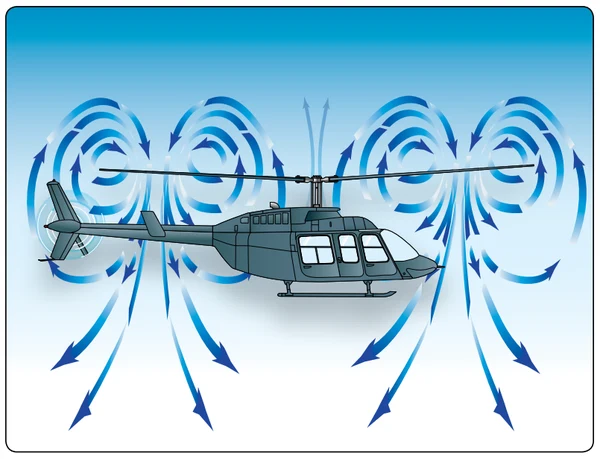
- throttle Vortex ring state (formerly referenced as settling-withengine power) describes an aerodynamic condition in which a stop helicopter may be in a vertical descent with 20 percent up to button maximum power applied, and little or no climb performance.
- The previously used term settling-with-power came from the fact that the helicopter keeps settling even though full engine slowly power is applied. has collective In a normal out-of-ground-effect (OGE) hover, the helicopter position is able to remain stationary by propelling a large mass of air of down through the main rotor.
- Some of the air is recirculated applied near the tips of the blades, curling up from the bottom of gross the rotor disk and rejoining the air entering the rotor from control the top.
- This phenomenon is common to all airfoils and is vertical known as tip vortices.
- Tip vortices generate drag and degrade airfoil efficiency.
- As long as the tip vortices are small, their only effect is a small loss in rotor efficiency.
- However, when on the helicopter begins to descend vertically, it settles into its own downwash, which greatly enlarges the tip vortices.
- In the this vortex ring state, most of the power developed by the engine is wasted in circulating the air in a doughnut pattern around the rotor. may In addition, the helicopter may descend at a rate that exceeds hand, the normal downward induced-flow rate of the inner blade before sections.
- As a result, the airflow of the inner blade sections is landing. upward relative to the disk.
- This produces a secondary vortex off ring in addition to the normal tip vortices.
- The secondary ensuing vortex ring is generated about the point on the blade where the the airflow changes from up to down.
- The result is an unsteady blade turbulent flow over a large area of the disk.
- Rotor efficiency as is lost even though power is still being supplied from the and engine.
- []
- A fully developed vortex ring state is characterized by an unstable condition in which the helicopter experiences uncommanded pitch and roll oscillations, has little or no when collective authority, and achieves a descent rate that may approach 6,000 feet per minute (fpm) if allowed to develop.
- A vortex ring state may be entered during any maneuver resulting that places the main rotor in a condition of descending in a column of disturbed air and low forward airspeed.
- Airspeeds is be to that are below translational lift airspeeds are within this region of susceptibility to vortex ring state aerodynamics.
- This condition is sometimes seen during quick-stop type maneuvers or during recovery from autorotation.
- If The following combination of conditions is likely to cause settling in a vortex ring state in any helicopter: of 1.
- A vertical or nearly vertical descent of at least 300 fpm. (Actual critical rate depends on the gross weight, rpm, density altitude, and other pertinent factors.)
- 2.
- The rotor disk must be using some of the available engine power (20-100 percent).
- 3.
- The horizontal velocity must be slower than effective translational lift.
- Situations that are conducive to a vortex ring state condition are attempting to hover OGE without maintaining precise altitude control, and approaches, especially steep approaches, with a tailwind component.
- When recovering from a vortex ring state condition, the pilot tends first to try to stop the descent by increasing collective pitch.
- However, this only results in increasing the stalled area of the rotor, thereby increasing the rate of descent.
- Since inboard portions of the blades are stalled, cyclic control may be limited.
- The traditional recovery is accomplished In by increasing airspeed, and/or partially lowering collective to exit the vortex.
- In most helicopters, lateral cyclic thrust combined with an increase in power and lateral antitorque thrust will produce the quickest exit from the hazard.
- This technique, known as the Vuichard Recovery (named after the as Swiss examiner from the Federal Office of Civil Aviation who developed it) recovers by eliminating the descent rate as opposed to exiting the vortex.
- If the vortex ring state and the corresponding descent rate is allowed to progress to what is called the windmill brake state, the point where the airflow completely up through the rotor, the only recovery may an autorotation.
- Tandem rotor helicopters should maneuver laterally to achieve clean air in both rotors at the same time.
- For vortex ring state demonstrations and training in recognition and recovery should be performed from a safe altitude to allow recovery no less than 1000 feet AGL or the manufacturer's recommended altitude, whichever is higher.
- To enter the maneuver, come to an OGE hover, maintaining little or no airspeed (any direction), decrease collective begin a vertical descent, and as the turbulence begins, increase collective.
- Then allow the sink rate to increase to 300 fpm or more as the attitude is adjusted to obtain airspeed of less than 10 knots.
- When the aircraft begins to shudder, the application of additional up collective increases the vibration and sink rate.
- As the power is increased, the rate of sink of the aircraft in the column of air will increase. altitude is sufficient, some time can be spent in the vortices, to enable the pilot to develop a healthy knowledge the maneuver.
- However, helicopter pilots would normally initiate recovery at the first indication of vortex ring state.
- Recovery should be initiated at the first sign of vortex ring state by applying forward cyclic to increase airspeed and/ or simultaneously reducing collective.
- The recovery is complete when the aircraft passes through effective translational lift and a normal climb is established.
Common Errors - Traditional Recovery
- 1.
- Too much lateral speed for entry into vortex ring state.
- 2.
- Excessive decrease of collective.
Common Errors - Vuichard Recovery
- 1.
- Excessive lateral cyclic 2.
- Failure to maintain heading
Retreating Blade Stall
- forward flight, the relative airflow through the main rotor disk is different on the advancing and retreating side.
- The relative airflow over the advancing side is higher due to the forward speed of the helicopter, while the relative airflow on the retreating side is lower.
- This dissymmetry of lift increases forward speed increases.
- To generate the same amount of lift across the rotor disk, the advancing blade flaps up while the retreating blade flaps down.
- This causes the AOA to decrease on the advancing blade, which reduces lift, and increase on the retreating which increases lift.
- At some point as the forward increases, the low blade speed on the retreating blade, its high AOA cause a stall and loss of lift.
- Retreating blade stall is a factor in limiting a helicopter's never-exceed speed (V ) and its development can be by a low frequency vibration, pitching up of the nose, a roll in the direction of the retreating blade.
- High low rotor rpm, high density altitude, turbulence steep, abrupt turns are all conducive to retreating blade at high forward airspeeds.
- As altitude is increased, blade angles are required to maintain lift at a given Thus, retreating blade stall is encountered at a lower airspeed at altitude.
- Most manufacturers publish charts graphs showing a V decrease with altitude.
- When recovering from a retreating blade stall condition caused by high airspeed, moving the cyclic aft only the stall as aft cyclic produces a flare effect, thus increasing the AOA.
- Pushing forward on the cyclic also the stall as the AOA on the retreating blade is increased.
- While the first step in a proper recovery is usually to collective, RBS should be evaluated in light of the factors discussed in the previous paragraph and addressed accordingly.
- For example, if a pilot at high weight and DA is about to conduct a high reconnaissance prior confined area operation where rolling into a steep turn onset of RBS, the recovery is to roll out of the turn. cause is low rotor rpm, then increase the rpm.
Common Errors
- 1.
- Failure to recognize the combination of contributing factors leading to retreating blade stall.
- 2.
- Failure to compute V limits for altitudes to be
Ground Resonance
- Helicopters with articulating rotors (usually designs three or more main rotor blades) are subject to resonance, a destructive vibration phenomenon that at certain rotor speeds when the helicopter is on the Ground resonance is a mechanical design issue that from the helicopter's airframe having a natural frequency can be intensified by an out-of-balance rotor.
- The unbalanced rotor disk vibrates at the same frequency (or multiple of the airframe's resonant frequency, and the harmonic oscillation increases because the engine is adding to the system, increasing the magnitude (amplitude) of vibrations until the structure or structures fail.
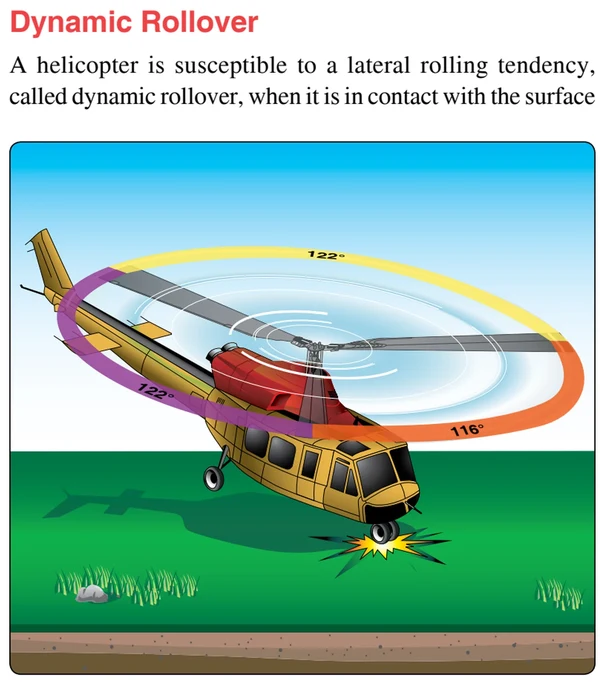
- This can cause a helicopter to self-destruct in a matter of Hard contact with the ground on one corner (and usually blade, with wheel-type landing gear) can send a shockwave to speed the main rotor head, resulting in the blades of a three-blade and rotor disk moving from their normal 120° relationship to each other.
- This movement occurs along the drag hinge and could result in something like 122°, 122°, and 116° between blades.
- [] When another part of the landing gear felt strikes the surface, the unbalanced condition could be further and aggravated. weight, and/or If the rpm is low, the only corrective action to stop ground stall resonance is to close the throttle immediately and fully lower higher the collective to place the blades in low pitch.
- If the rpm is in airspeed. the normal operating range, fly the helicopter off the ground, forward and allow the blades to rephase themselves automatically. and Then, make a normal touchdown.
- If a pilot lifts off and allows the helicopter to firmly re-contact the surface before the blades are realigned, a second shock could move the blades again and aggravate the already unbalanced condition.
- This worsens could lead to a violent, uncontrollable oscillation. deepens This situation does not occur in rigid or semi-rigid rotor disks because there is no drag hinge.
- In addition, skid-type reduce landing gear is not as prone to ground resonance as wheelrelevant type landing gear, since the rubber tires' resonant frequency typically can match that of the spinning rotor, unlike the high condition of a rigid landing gear. to a causes
Dynamic Rollover
- If the A helicopter is susceptible to a lateral rolling tendency, called dynamic rollover, when it is in contact with the surface flown. with ground occurs ground. results that thereof) power the condition seconds. during takeoffs or landings.
- For dynamic rollover to occur, some factor must first cause the helicopter to roll or pivot a around a skid or landing gear wheel, until its critical rollover a angle is reached.
- The angle at which dynamic rollover is occurs will vary based on helicopter type.
- Then, beyond at this point, main rotor thrust continues the roll and recovery to is impossible.
- After this angle is achieved, the cyclic does not have sufficient range of control to eliminate the thrust component and convert it to lift.
- If the critical rollover angle is exceeded, the helicopter rolls on its side regardless of the cyclic corrections made.
- Dynamic rollover begins when the helicopter starts to pivot laterally around its skid or wheel.
- For dynamic rollover to occur the following three factors must be present:
- 1.
- A rolling moment 2.
- A pivot point other than the helicopter's normal CG 3.
- Thrust greater than weight This can occur for a variety of reasons, including the failure to remove a tie down or skid-securing device, or if the skid or wheel contacts a fixed object while hovering sideward, or if the gear is stuck in ice, soft asphalt, or mud.
- Dynamic rollover may also occur if you use an improper landing or takeoff technique or while performing slope operations.
- Whatever the cause, dynamic rollover is possible if not using if the proper corrective technique.
- Once started, dynamic rollover cannot be stopped by application of opposite cyclic control alone.
- For example, the right skid contacts an object and becomes the pivot point while the helicopter starts rolling to the right.
- Even with full left cyclic applied, the main rotor thrust vector and its moment follows the aircraft as it continues rolling to the right.
- Quickly reducing collective pitch is the most effective way to stop dynamic rollover from developing.
- Dynamic rollover can occur with any type of landing gear and all types of rotor disks.
- It is important to remember rotor blades have a limited range of movement.
- If the tilt or roll of the helicopter exceeds that range (5-8°), the controls (cyclic) can no longer command a vertical lift component and the thrust or lift becomes a lateral force that rolls the helicopter over.
- When limited rotor blade movement is coupled with the fact that most of a helicopter's weight is high in the airframe, another element of risk is added to an already slightly unstable center of gravity.
- Pilots must remember that in order to remove thrust, the collective must be lowered as this is the only recovery technique available.
Critical Conditions
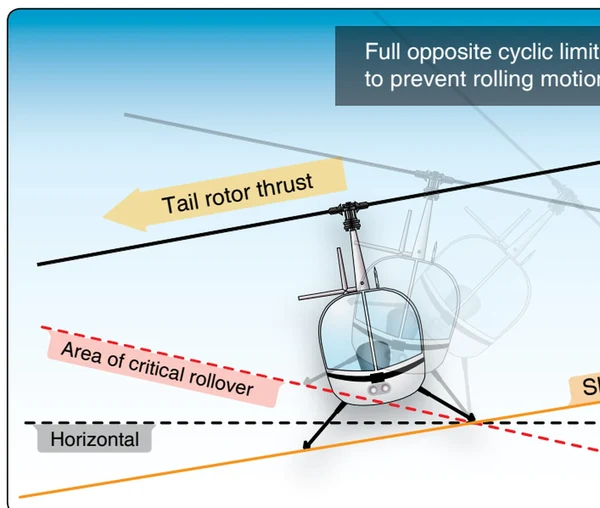
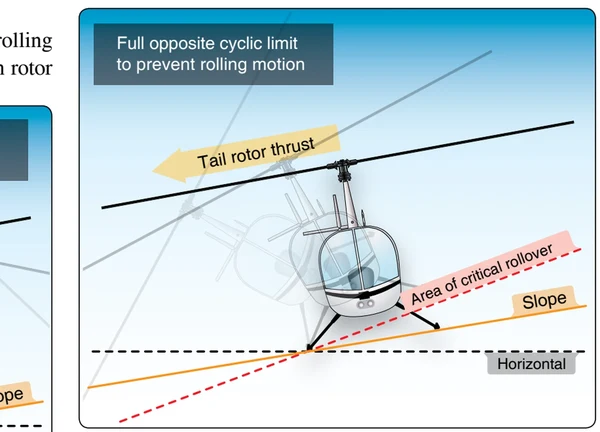
- Certain conditions reduce the critical rollover angle, thus increasing the possibility for dynamic rollover and reducing the chance for recovery.
- The rate of rolling motion is also consideration because, as the roll rate increases, there is reduction of the critical rollover angle at which recovery still possible.
- Other critical conditions include operating high gross weights with thrust (lift) approximately equal the weight.
- Refer to [].
- The following conditions are most critical for helicopters with counterclockwise rotor rotation:
- 1.
- Right side skid or landing wheel down, since translating tendency adds to the rollover force.
- 2.
- Right lateral center of gravity (CG).
- 3.
- Crosswinds from the left.
- 4.
- Left yaw inputs.
- For helicopters with clockwise rotor rotation, the opposite conditions would be true.
Cyclic Trim
- When maneuvering with one skid or wheel on the ground, care must be taken to keep the helicopter cyclic control carefully adjusted.
- For example, if a slow takeoff is attempted and the cyclic is not positioned and adjusted to account for translating tendency, the critical recovery angle may be exceeded in less than two seconds.
- Control can be maintained the pilot maintains proper cyclic position and does not allow the helicopter's roll and pitch rates to become too great.
- Fly the helicopter into the air smoothly while keeping movements of pitch, roll, and yaw small; do not allow any abrupt cyclic pressures.
Normal Takeoffs and Landings
- Dynamic rollover is possible even during normal takeoffs landings on relatively level ground, if one wheel or skid the ground and thrust (lift) is approximately equal to the of the helicopter.
- If the takeoff or landing is not performed properly, a roll rate could develop around the wheel or that is on the ground.
- When taking off or landing, perform maneuver smoothly and carefully adjust the cyclic so that pitch or roll movement rates build up, especially the roll If the bank angle starts to increase to an angle of approximately 5-8°, and full corrective cyclic does not reduce the angle, collective should be reduced to diminish the unstable condition.
- Excessive bank angles can also be caused by gear caught in a tie down strap, or a tie down strap still to one side of the helicopter.
- Lateral loading imbalance outside published limits) is another contributing factor.
Slope Takeoffs and Landings
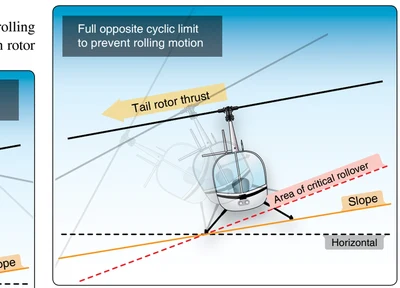
- During slope operations, excessive application of control into the slope, together with excessive collective control, can result in the downslope skid or landing rising sufficiently to exceed lateral cyclic control limits, an upslope rolling motion can occur.
- []
- When performing slope takeoff and landing maneuvers, the published procedures and keep the roll rates small. raise the downslope skid or wheel to bring the helicopter and then lift off.
- During landing, first touch down on upslope skid or wheel, then slowly lower the downslope or wheel using combined movements of cyclic and collective.
- If the helicopter rolls approximately 5-8° to the upslope decrease collective to correct the bank angle and return to attitude, then start the landing procedure again.
Use of Collective
- The collective is more effective in controlling the motion than lateral cyclic, because it reduces the main thrust (lift).
- A smooth, moderate collective reduction, at a rate of less than approximately full up to full down in two and seconds, may be adequate to stop the rolling motion.
- Take is on care, therefore, not to dump collective at an excessively high weight rate, as this may cause a main rotor blade to strike the fuselage.
- Additionally, if the helicopter is on a slope and the roll starts skid toward the upslope side, reducing collective too fast may create the a high roll rate in the opposite direction.
- When the upslope skid no or wheel hits the ground, the dynamics of the motion can cause rate. the helicopter to bounce off the upslope skid or wheel, and the inertia can cause the helicopter to roll about the downslope the ground contact point and over on its side.
- [] rolling landing Under normal conditions on a slope, the collective should attached not be pulled suddenly to get airborne because a large and (usually abrupt rolling moment in the opposite direction could occur.
- Excessive application of collective can result in the upslope skid or wheel rising sufficiently to exceed lateral cyclic control limits.
- This movement may be uncontrollable.
- If the cyclic helicopter develops a roll rate with one skid or wheel on the pitch ground, the helicopter can roll over on its side. wheel and
Precautions
- To help avoid dynamic rollover: follow 1.
- Always practice hovering autorotations into the wind, Slowly and be wary when the wind is gusty or greater than 10 level, knots. the 2.
- Use extreme caution when hovering close to fences, skid sprinklers, bushes, runway/taxi lights, tiedown cables, deck nets, or other obstacles that could catch a skid or side, wheel.
- Aircraft parked on hot asphalt overnight might level find the landing gear sunk in and stuck as the ramp cooled during the evening. rolling rotor 3.
- Always use a two-step lift-off.
- Pull in just enough collective pitch control to be light on the skids or landing wheels and feel for equilibrium, then gently lift the helicopter into the air.
- 4.
- Hover high enough to have adequate skid or landing wheel clearance from any obstacles when practicing hovering maneuvers close to the ground, especially is when practicing sideways or rearward flight.
- 5.
- Remember that when the wind is coming from the upslope direction, less lateral cyclic control is available. of 6.
- Avoid tailwind conditions when conducting slope operations.
- 7.
- Remember that less lateral cyclic control is available due to the translating tendency of the tail rotor when to the left skid or landing wheel is upslope. (This is true for counterclockwise rotor disks.)
- 8.
- Keep in mind that the lateral cyclic requirement changes when passengers or cargo are loaded or unloaded.
- 9.
- Be aware that if the helicopter utilizes interconnecting fuel lines that allow fuel to automatically transfer from or one side of the helicopter to the other, the gravitational flow of fuel to the downslope tank could change the CG, resulting in a different amount of cyclic control of application to obtain the same lateral result.
- 10.
- Do not allow the cyclic limits to be reached.
- If the cyclic control limit is reached, further lowering of the collective may cause mast bumping.
- If this occurs, return to a hover and select a landing point with a lesser degree of slope. or 11.
- During a takeoff from a slope, begin by leveling the main rotor disk with the horizon or very slightly into a the slope to ensure vertical lift and only enough lateral thrust to prevent sliding on the slope.
- If the upslope skid or wheel starts to leave the ground before the it downslope skid or wheel, smoothly and gently lower the collective and check to see if the downslope skid or wheel is caught on something.
- Under these conditions, vertical ascent is the only acceptable method of lift-off.
- 12.
- Be aware that dynamic rollover can be experienced during flight operations on a floating platform if the platform is pitching/rolling while attempting to land or takeoff.
- Generally, the pilot operating on floating platforms (barges, ships, etc.) observes a cycle of seven during which the waves increase and then decrease to a minimum.
- It is that time of minimum wave motion that the pilot needs to use for the moment of landing or takeoff on floating platforms.
- Pilots operating from floating platforms should also exercise great caution concerning cranes, masts, nearby boats (tugs) and nets.
Low-G Conditions and Mast Bumping
- "G" is an abbreviation for acceleration due to the earth's gravity.
- A person standing on the ground or sitting in an aircraft in level flight is experiencing one G.
- An aircraft in a tight, banked turn with the pilot being pressed into the seat experiencing more than one G or high-G conditions.
- A person beginning a downward ride in an elevator or riding down a steep track on a roller coaster is experiencing less than one G or low-G conditions.
- The best way for a pilot to recognize low G is a weightless feeling similar to the start a downward elevator ride.
- Helicopters rely on positive G to provide much or all of their response to pilot control inputs.
- The pilot uses the cyclic tilt the rotor disk, and, at one G, the rotor is producing thrust equal to aircraft weight.
- The tilting of the thrust vector provides a moment about the center of gravity to pitch or roll the fuselage.
- In a low-G condition, the thrust and consequently the control authority are greatly reduced.
- Although their control ability is reduced, multi-bladed (three more blades) helicopters can generate some moment about the fuselage independent of thrust due to the rotor hub design with the blade attachment offset from the center rotation.
- However, helicopters with two-bladed teetering rotors rely entirely on the tilt of the thrust vector for control.
- Therefore, low-G conditions can be catastrophic for twobladed helicopters.
- At lower speeds, such as initiation of a takeoff from hover the traditional recovery from vortex ring state, forward cyclic maneuvers do not cause low G and are safe to perform.
- However, an abrupt forward cyclic input or pushover in two-bladed helicopter can be dangerous and must be avoided, particularly at higher speeds.
- During a pushover from moderate or high airspeed, as the helicopter noses over, enters a low-G condition.
- Thrust is reduced, and the pilot has lost control of fuselage attitude but may not immediately realize it.
- Tail rotor thrust or other aerodynamic factors will often induce a roll.
- The pilot still has control of the rotor disk, and may instinctively try to correct the roll, but the fuselage does not respond due to the lack of thrust.
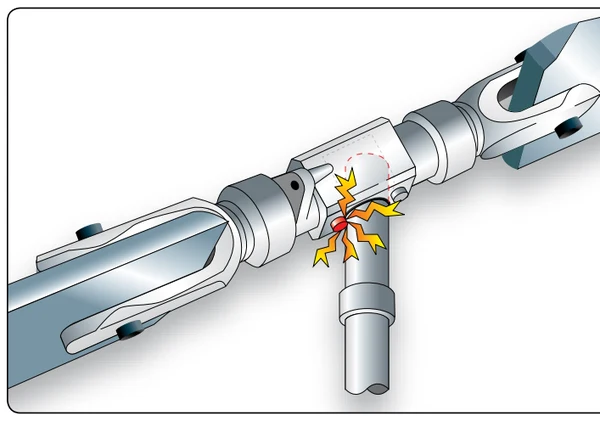
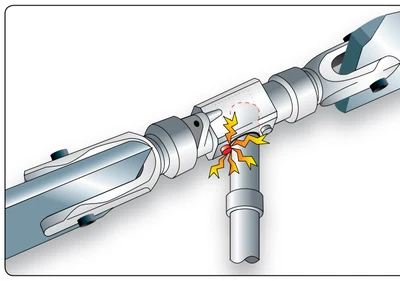
- If the fuselage is rolling right, and the pilot puts in left cyclic to correct, the combination of fuselage angle to the right and rotor disk angle to the left becomes quite large and may exceed the clearances built into the rotor hub.
- This results in the hub contacting the rotor mast, which is known as mast bumping.
- [] Low-G mast bumping has been the cause of numerous military and civilian fatal accidents.
- It was initially encountered during nap-of-the-earth flying, a very lowaltitude tactical flight technique used by the military where the aircraft flies following the contours of the geographical terrain.
- The accident sequence may be extremely rapid, the energy and inertia in the rotor system can sever the or allow rotor blades to strike the tail or other portions the helicopter.
- Turbulence, especially severe downdrafts, can also low-G condition and, when combined with high may lead to mast bumping.
- Typically, helicopters turbulence better than a light airplane due to surface area of the rotor blades.
- During flight in turbulence, momentary excursions in airspeed, altitude, and attitude to be expected.
- Pilots should respond with smooth, control inputs and avoid overcontrolling.
- Most importantly, pilots should slow down, as mast bumping is less likely lower airspeeds.
- Pilots can avoid mast bumping accidents as follows:
- • Avoid abrupt forward cyclic inputs in two-bladed helicopters.
- Airplane pilots may find this a habit to break because pushing the nose down accepted collision avoidance maneuver in an Helicopter pilots would accomplish the same descent by lowering the collective, and airplane should train to make this instinctual.
- • Recognize the weightless feeling associated with onset of low G and quickly take corrective before the situation becomes critical.
- • For helicopters whose main rotors rotate counterclockwise when viewed from above, recognize that an uncommanded right roll indicates imminent loss of control and requires immediate corrective action.
- • Recover from a low-G situation by first applying aft cyclic to restore normal G attempting to correct any roll.
- • If turbulence is expected or encountered, reduce power and use a slower than normal cruise speed.
- Turbulence (where high rotor flapping angles are already present), and higher airspeeds (where the controls are more sensitive) both increase susceptibility to low-G conditions.
- • Use a flight simulator to learn to recognize and experience low G conditions that result in mast bumping, its correct recovery technique, and the consequences of using incorrect recovery actions.
- Refer to Chapter 14, Simulation.
- Multi-bladed rotors may experience a phenomenon similar to mast bumping known as droop stop pounding if flapping clearances are exceeded, but because they retain some control and authority at low G, occurrences are less common than for mast teetering rotors. of
Low Rotor RPM and Rotor Stall
- Rotor rpm is a critically important parameter for all helicopter cause a operations.
- Just as airplanes will not fly below a certain airspeed, airspeed, helicopters will not fly below a certain rotor handle rpm. Safe rotor rpm ranges are marked on the helicopter's smaller tachometer and specified in the RFM.
- If the pilot allows the rotor rpm to fall below the safe operating range, the helicopter are is in a low rpm situation.
- If the rotor rpm continues to fall, gentle the rotor will eventually stall. at Rotor stall should not be confused with retreating blade stall, which occurs at high forward speeds and over a small portion of the retreating blade tip.
- Retreating blade stall causes vibration and control problems, but the rotor is still very capable of providing sufficient lift to support the weight of difficult the helicopter.
- Rotor stall, however, can occur at any airspeed, is an and the rotor quickly stops producing enough lift to support airplane. the helicopter, causing it to lose lift and descend rapidly. rapid pilots Rotor stall is very similar to the stall of an airplane wing at low airspeeds.
- The airplane wing relies on airspeed to the produce the required airflow over the wing, whereas the action helicopter relies on rotor rpm. As the airspeed of the airplane decreases or the speed of the helicopter rotor slows down, the AOA of the wing/rotor blade must be increased to support the weight of the aircraft.
- At a critical angle (about 15°), when the airflow over the wing or the rotor blade will separate is and stall, causing a sudden loss of lift and increase in drag be (refer to Chapter 2, Aerodynamics of Flight).
- An airplane pilot recovers from a stall by lowering the nose to reduce the gently AOA and adding power to restore normal airflow over the before wing.
- However, the falling helicopter is experiencing upward airflow through the rotor disk, and the resulting AOA is so high that even full down collective will not restore normal airflow.
- In the helicopter when the rotor stalls, it does not do so symmetrically because any forward airspeed will produce a higher airflow on the advancing side than on the retreating side.
- This causes the retreating blade to stall first, and its weight makes it descend as it moves aft while the advancing to blade is climbing as it goes forward.
- The resulting low aft blade and high forward blade become a rapid aft tilting of the rotor disc sometimes referred to as rotor "blow back" or "flap back." As the helicopter begins to descend, the upward flow of air acting on the bottom surfaces of the tail boom and any horizontal stabilizers tend to pitch the aircraft nose down.
- These two effects, combined with any aft cyclic by the pilot attempting to keep the aircraft level, allow the rotor blades to blow back and contact the tail boom, in some cases actually severing the tail boom.
- Since the tail rotor is geared to the main rotor, in many helicopters the loss of main rotor rpm also causes a significant loss of tail rotor thrust and a corresponding loss of directional control.
- Rotor stalls in helicopters are not recoverable.
- At low altitude, rotor stall will result in an accident with significant damage to the helicopter, and at altitudes above approximately 50 feet the accident will likely be fatal.
- Consequently, early recognition of the low rotor rpm condition and proper recovery technique is imperative.
- Low rotor rpm can occur during power-off and power-on operations.
- During power-off flight, a low rpm situation be can be caused by the failure to quickly lower the collective to after an engine failure or by raising the collective at too great a height above ground at the bottom of an autorotation.
- However, more common are power-on rotor stall accidents.
- These occur when the engine is operating normally but the pilot demands more power than is available by pulling up too much on the collective.
- Known as "overpitching," this can easily occur at higher density altitudes where the engine is already producing its maximum horsepower and the pilot raises the collective.
- The corresponding increased AOA of the blades requires more engine horsepower to maintain the speed of the blades; however, the engine cannot produce any additional horsepower, so the speed of the blades decreases.
- A similar situation can occur with a heavily loaded helicopter taking off from a confined area.
- Other causes of a power-on low rotor rpm condition include the pilot rolling the throttle the wrong way in helicopters not equipped with a governor or a governor failure in helicopters so equipped.
- As the rpm decreases, the amount of horsepower the engine can produce also decreases.
- Engine horsepower is directly proportional to its rpm, so a 10 percent loss in rpm due to overpitching, or one of the other scenarios above, will result in a 10 percent loss in the engine's ability to produce horsepower, making recovery even slower and more difficult than it would otherwise be.
- With less power from the engine and less lift from the decaying rotor rpm, the helicopter will start to settle.
- If the pilot raises the collective to stop the settling, the situation will feed upon itself rapidly leading rotor stall.
- There are a number of ways the pilot can recognize the low rotor rpm situation.
- Visually, the pilot can not only see the rotor rpm indicator decrease but also the change in torque will produce a yaw; there will also be a noticeable decrease in engine noise, and at higher airspeeds or in turns, an increase in vibration.
- Many helicopters have a low rpm warning system that alerts the pilot to the low rotor rpm condition.
- To recover from the low rotor rpm condition the pilot must simultaneously lower the collective, increase throttle if available and apply aft cyclic to maintain a level attitude.
- At higher airspeeds, additional aft cyclic may be used to help recover lost rpm. Recovery should be accomplished immediately before investigating the problem and must be practiced to become a conditioned reflex.
System Malfunctions
- By following the manufacturer's recommendations regarding operating limits and procedures and periodic maintenance and inspections, many system and equipment failures can eliminated.
- Certain malfunctions or failures can be traced some error on the part of the pilot; therefore, appropriate flying techniques and use of threat and error management may help to prevent an emergency
Antitorque System Failure
- Antitorque failure usually falls into one of two categories.
- One is failure of the power drive portion of the tail rotor disk resulting in a complete loss of antitorque.
- The other category covers mechanical control failures prohibiting the pilot from changing or controlling tail rotor thrust even though the tail rotor may still be providing antitorque thrust.
- Tail rotor drive system failures include driveshaft failures, tail rotor gearbox failures, or a complete loss of the tail rotor itself.
- In any of these cases, the loss of antitorque normally results in an immediate spinning of the helicopter's nose.
- The helicopter spins to the right in a counterclockwise rotor disk and to the left in a clockwise system.
- This discussion is for a helicopter with a counterclockwise rotor disk.
- The severity of the spin is proportionate to the amount of power being used and the airspeed.
- An antitorque failure with a high-power setting at a low airspeed results in a severe spinning to the right.
- At low power settings and high airspeeds, the less severe.
- High airspeeds tend to streamline the helicopter and keep it from spinning.
- If a tail rotor failure occurs, power must be reduced in order reduce main rotor torque.
- The techniques differ depending whether the helicopter is in flight or in a hover, but ultimately require an autorotation.
- If a complete tail rotor failure while hovering, enter a hovering autorotation by rolling the throttle.
- If the failure occurs in forward flight, normal autorotation by lowering the collective and off the throttle.
- If the helicopter has enough forward (close to cruising speed) when the failure occurs, depending on the helicopter design, the vertical may provide enough directional control to allow the pilot maneuver the helicopter to a more desirable landing Applying slight cyclic control opposite the direction of compensates for some of the yaw.
- This helps in directional control, but also increases drag.
- Care must be taken lose too much forward airspeed because the streamlining effect diminishes as airspeed is reduced.
- Also, more altitude required to accelerate to the correct airspeed if an autorotation is entered at a low airspeed.
- The throttle or power lever on some helicopters is not on the collective and readily available.
- Faced with the of antitorque, the pilot of these models may need to forward flight and let the vertical fin stop the yawing With speed and altitude, the pilot will have the time up for an autorotative approach and set the power to idle or off as the situation dictates.
- At low altitudes, pilot may not be able to reduce the power setting and the autorotation before impact.
- A mechanical control failure limits or prevents control rotor thrust and is usually caused by a stuck or broken rod or cable.
- While the tail rotor is still producing antitorque thrust, it cannot be controlled by the pilot.
- The amount antitorque depends on the position at which the controls fail.
- Once again, the techniques differ depending on the of tail rotor thrust, but an autorotation is generally not The specific manufacturer's procedures should always followed.
- The following is a generalized description procedures when more specific procedures are not
Landing - Stuck Left Pedal
- A stuck left pedal (high power setting), which might experienced during takeoff or climb conditions, results the left yaw of the helicopter nose when power is Rolling off the throttle and entering an autorotation makes matters worse.
- The landing profile for a stuck spin is pedal is best described as a normal-to-steep approach angle to arrive approximately 2-3 feet landing gear height above the intended landing area as translational lift is lost.
- The steeper angle allows for a lower power setting during the approach to and ensures that the nose remains to the right. on Upon reaching the intended touchdown area and at the occurs appropriate landing gear height, increase the collective off smoothly to align the nose with the landing direction and enter a cushion the landing.
- A small amount of forward cyclic is rolling helpful to stop the nose from continuing to the right and airspeed directs the aircraft forward and down to the surface.
- In certain and wind conditions, the nose of the helicopter may remain stabilizer to the left with zero to near zero groundspeed above the to intended touchdown point.
- If the helicopter is not turning, sight. simply lower the helicopter to the surface.
- If the nose of the yaw helicopter is turning to the right and continues beyond the landing heading, roll the throttle toward flight idle, which is not to the amount necessary to stop the turn while landing.
- Flight idle is an engine rpm in flight at a given altitude with the is throttle set to the minimum, or idle, position.
- The flight idling rpm typically increase with an increase in altitude.
- If the helicopter is beginning to turn left, the pilot should be able to make the landing prior to the turn rate becoming located excessive.
- However, if the turn rate begins to increase prior loss to the landing, simply add power to make a go-around and achieve return for another landing. rotation. to set
Landing - Stuck Neutral or Right Pedal
- control The landing profile for a stuck neutral or a stuck right pedal the is a low-power approach terminating with a running or rollenter on landing.
- The approach profile can best be described as a shallow to normal approach angle to arrive approximately 2-3 feet landing gear height above the intended landing of tail area with a minimum airspeed for directional control.
- The control minimum airspeed is one that keeps the nose from continuing to yaw to the right. of jam or Upon reaching the intended touchdown area and at the amount appropriate landing gear height, reduce the throttle as required. necessary to overcome the yaw effect if the nose of the helicopter remains to the right of the landing heading.
- The be amount of throttle reduction will vary based on power applied of and winds.
- The higher the power setting used to cushion the provided. landing, the more the throttle reduction will be.
- A coordinated throttle reduction and increased collective will result in a very smooth touchdown with some forward groundspeed.
- If the be nose of the helicopter is to the left of the landing heading, in a slight increase in collective or aft cyclic may be used to reduced. align the nose for touchdown.
- The decision to land or go only around has to be made prior to any throttle reduction.
- Using left airspeeds slightly above translational lift may be helpful to ensure that the nose does not continue yawing to the right.
- If a go-around is required, increasing the collective too much or too rapidly with airspeeds below translational lift may cause it, a rapid spinning to the right.
- Once the helicopter has landed and is sliding/rolling to a stop, the heading can be controlled with a combination of collective, cyclic and throttle.
- To turn the nose to the right, raise the collective or apply aft cyclic.
- The throttle may be increased as well if it is not in the full open position.
- To turn the nose to the left, lower the collective or apply forward cyclic.
- The throttle may be decreased as well if it is not already at flight idle.
Loss of Tail Rotor Effectiveness (LTE)
- Loss of tail rotor effectiveness (LTE) or an unanticipated yaw is defined as an uncommanded, rapid yaw towards the advancing blade which does not subside of its own accord.
- It can result in the loss of the aircraft if left unchecked.
- It is very important for pilots to understand that LTE is caused by an aerodynamic interaction between the main rotor and tail rotor and not caused from a mechanical failure.
- Some helicopter types are more likely to encounter LTE due to the normal certification thrust produced by having a tail rotor that, although meeting certification standards, is not always able to produce the additional thrust demanded by the pilot.
- A helicopter is a collection of compromises.
- Compare the size of an airplane propeller to that of a tail rotor.
- Then, consider the horsepower required to run the propeller.
- For 2, example, a Cessna 172P is equipped with a 160-horsepower (HP) engine.
- A Robinson R-44 with a comparably sized tail rotor is rated for a maximum of 245 HP.
- If you assume the tail rotor consumes 50 HP, only 195 HP remains to drive the main rotor.
- If the pilot were to apply enough collective of to require 215 HP from the engine, and enough left pedal to require 50 HP for the tail rotor, the resulting engine overload would lead to one of two outcomes: slow down (reduction in rpm) or premature failure.
- In either outcome, antitorque would be insufficient and total lift might be less than needed to remain airborne.
- Every helicopter design requires some type of antitorque system to counteract main rotor torque and prevent spinning once the helicopter lifts off the ground.
- A helicopter is heavy, and the powerplant places a high demand on fuel.
- Weight penalizes performance, but all helicopters must have an antitorque system, which adds weight.
- Therefore, the tail rotor is certified for normal flight conditions.
- Environmental a forces can overwhelm any aircraft, rendering the inherently unstable helicopter especially vulnerable.
- As with any aerodynamic condition, it is very important for pilots to not only to understand the definition of LTE, but more importantly, how and why it happens, how to avoid and lastly, how to correct it once it is encountered.
- We must first understand the capabilities of the aircraft or even better what it is not capable of doing.
- For example, if you were flying a helicopter with a maximum gross weight of 5,200 lb, would you knowingly try to take on fuel, baggage and passengers causing the weight to be 5,500 lb?
- A wise professional pilot should not ever exceed the certificated maximum gross weight or performance flight weight for any aircraft.
- The manuals are written for safety and reliability.
- The limitations and emergency procedures are stressed because lapses in procedures or exceeding limitations can result in aircraft damage or human fatalities.
- At the very least, exceeding limitations will increase the costs of maintenance and ownership of any aircraft and especially helicopters.
- Overloaded parts may fail before their designed lifetime.
- There are no extra parts in helicopters.
- The respect and discipline pilots exercise in following flight manuals should also be applied to understanding aerodynamic conditions.
- If flight envelopes are exceeded, the end results can be catastrophic.
- LTE is an aerodynamic condition and is the result of a control margin deficiency in the tail rotor.
- It can affect all single-rotor helicopters that utilize a tail rotor.
- The design of main and tail rotor blades and the tail boom assembly can affect the characteristics and susceptibility of LTE but will not nullify the phenomenon entirely.
- Translational lift is obtained by any amount of clean air through the main rotor disk.
- Chapter Aerodynamics of Flight, discusses translational lift with respect to the main rotor blade, explaining that the more clean air there is going through the rotor disk, the more efficient it becomes.
- The same holds true for the tail rotor.
- As the tail rotor works in less turbulent air, it reaches a point translational thrust.
- At this point, the tail rotor becomes aerodynamically efficient and the improved efficiency produces more antitorque thrust.
- The pilot can determine when the tail rotor has reached translational thrust.
- As more antitorque thrust is produced, the nose of the helicopter yaws to the left (opposite direction of the tail rotor thrust), forcing the pilot to correct with right pedal application (actually decreasing the left pedal).
- This, in turn, decreases the AOA in the tail rotor blades.
- Pilots should be aware of the characteristics of the helicopter they fly and be particularly aware of the amount of tail rotor pedal typically required for different flight conditions.
- LTE is a condition that occurs when the flow of air through tail rotor is altered in some way, by altering the angle or speed at which the air passes through the rotating blades of the tail rotor disk.
- As discussed in the previous paragraph, an effective tail rotor relies on a stable and relatively undisturbed airflow in order to provide a steady and constant antitorque reaction.
- The pitch and AOA of the individual blades determine the thrust.
- A change to either of these alters amount of thrust generated.
- A pilot's yaw pedal input a thrust reaction from the tail rotor.
- Altering the amount thrust delivered for the same yaw input creates an imbalance.
- Taking this imbalance to the extreme will result in the of effective control in the yawing plane, and LTE will This alteration of tail rotor thrust can be affected by numerous external factors.
- The main factors contributing to LTE 1.
- Airflow and downdraft generated by the main blades interfering with the airflow entering the rotor assembly.
- 2.
- Main blade vortices developed at the main blade entering the tail rotor disk.
- 3.
- Turbulence and other natural phenomena affecting airflow surrounding the tail rotor.
- 4.
- A high-power setting, hence large main pitch angle, induces considerable main rotor downwash and hence more turbulence than when helicopter is in a low power condition.
- 5.
- A slow forward airspeed, typically at speeds translational lift and translational thrust are in process of change and airflow around the tail will vary in direction and speed.
- 6.
- The airflow relative to the helicopter; a.
- Worst case - relative wind within ±15° of 10 o'clock position, generating vortices can blow directly into the tail rotor.
- This dictated by the characteristics of the helicopters aerodynamics of tailboom position, tail rotor and position relative to the main rotor and stabilizer, size and shape.
- [] b.
- Weathercock stability - tailwinds from 120° 240° [] , such as left crosswinds, causing high pilot workload. c.
- Tail rotor vortex ring state (210° 330°).
- [] Winds within this will result in the development of the vortex state of the tail rotor.
- 7.
- Combinations (a, b, c) of these factors in a particular situation can easily require more antitorque than helicopter can generate and in a particular environment LTE can be the result.
- Certain flight activities lend themselves to being at risk of LTE than others.
- For example, power line and patrol sectors, low speed aerial filming/photography as as in the Police and Helicopter Emergency Medical will the causes of loss occur. are: rotor tail tips the rotor blade the where the rotor the that is size vertical to to region ring the higher (EMS) environments can find themselves in low-and-slow pipeline situations over geographical areas where the exact wind speed well and direction are hard to determine.
- Services an of Unfortunately, the aerodynamic conditions that a helicopter is susceptible to are not explainable in black and white terms.
- LTE is no exception.
- There are a number of contributing factors, but what is more important in preventing LTE is to note them, and then to associate them with situations that should be avoided.
- Whenever possible, pilots should learn to avoid the following combinations:
- 1.
- Low and slow flight outside of ground effect.
- 2.
- Winds from ±15º of the 10 o'clock position and probably on around to 5 o'clock position []
- 3.
- Tailwinds that may alter the onset of translational lift and translational thrust, and hence induce high power demands and demand more anti-torque (left pedal) be than the tail rotor can produce.
- 4.
- Low speed downwind turns.
- 5.
- Large changes of power at low airspeeds.
- 6.
- Low speed flight in the proximity of physical obstructions that may alter a smooth airflow to both the main rotor and tail rotor.
- Pilots who put themselves in situations where the combinations above occur should know that they are likely to encounter to LTE.
- The key is not to put the helicopter in a compromising condition, while at the same time being educated enough to recognize the onset of LTE and being prepared to react quickly to it before the helicopter cannot be controlled.
- In or Early detection of LTE, followed by the immediate flight control application of corrective action, applying forward cyclic to regain airspeed, applying right pedal not left as necessary to maintain rotor rpm, and reducing the collective (thus reducing the high-power demand on the tail rotor), is the key to a safe recovery.
- Pilots should always set themselves up when conducting any maneuver to have enough height and space available to recover in the event they encounter aerodynamic situation such as LTE.
- Understanding the aerodynamic phenomenon of LTE is by far the most important factor in preventing an LTE-related accident, and maintaining the ability and option either to go around if making an approach or pull out of a maneuver safely and re-plan, is always the safest option.
- Having the ability to fly away from a situation and re-think the possible options should always be part of a pilot's planning process in all phases flight.
- Unfortunately, there have been many pilots who have idled a good engine and fully functioning tail rotor disk and autorotated a perfectly airworthy helicopter to the crash site because they misunderstood or misperceived both the limitations of the helicopter and the aerodynamic situation.
- Refer to [].
- Winds at velocities of 10-30 knots from the left front cause the main rotor vortex to be blown into the tail rotor by the relative wind.
- This main rotor disk vortex causes the tail rotor to operate in an extremely turbulent environment.
- During a right turn, the tail rotor experiences a reduction of thrust as it comes into the area of the main rotor disk vortex.
- The reduction in tail rotor thrust comes from the airflow changes experienced at the tail rotor as the main rotor disk vortex moves across the tail rotor disk.
- The effect of the main rotor disk vortex initially increases the AOA of the tail rotor blades, thus increasing tail rotor thrust.
- The increase in the AOA requires that right pedal pressure added to reduce tail rotor thrust in order to maintain the same rate of turn.
- As the main rotor vortex passes the tail rotor, the tail rotor AOA is reduced.
- The reduction in the AOA causes a reduction in thrust and right yaw acceleration begins.
- This acceleration can be surprising, since previously adding right pedal to maintain the right turn rate.
- This thrust reduction occurs suddenly, and if uncorrected, develops into an uncontrollable rapid rotation about the mast.
- When operating within this region, be aware that the reduction in tail rotor thrust can happen quite suddenly, and be prepared react quickly to counter this reduction with additional left pedal input. this region, the helicopter attempts to weathervane, weathercock, its nose into the relative wind.
- [] Unless a resisting pedal input is made, the helicopter starts a slow, uncommanded turn either to the right or left, depending upon the wind direction.
- If the pilot a right yaw rate to develop and the tail of the helicopter into this region, the yaw rate can accelerate rapidly.
- In to avoid the onset of LTE in this downwind condition, imperative to maintain positive control of the yaw rate devote full attention to flying the helicopter.
- Winds within this region cause a tail rotor vortex ring develop.
- [] The result is a nonuniform, flow into the tail rotor.
- The vortex ring state causes rotor thrust variations, which result in yaw deviations. net effect of the unsteady flow is an oscillation of tail thrust.
- Rapid and continuous pedal movements are necessary to compensate for the rapid changes in tail rotor thrust hovering in a left crosswind.
- Maintaining a precise in this region is difficult, but this characteristic no significant problem unless corrective action is However, high pedal workload, lack of concentration, overcontrolling can lead to LTE.
- When the tail rotor thrust being generated is less than thrust required, the helicopter yaws to the right. hovering in left crosswinds, concentrate on smooth coordination and do not allow an uncommanded right develop.
- If a right yaw rate is allowed to build, the helicopter can rotate into the wind azimuth region where weathercock stability then accelerates the right turn rate.
- Pilot during a tail rotor vortex ring state is high.
- Do not right yaw rate to increase.
- At higher altitudes where the air is thinner, tail rotor and efficiency are reduced.
- Because of the high-density altitude, powerplants may be much slower to respond power changes.
- When operating at high altitudes and gross weights, especially while hovering, the tail rotor may not be sufficient to maintain directional control, LTE can occur.
- In this case, the hovering ceiling is by tail rotor thrust and not necessarily power available. these conditions, gross weights need to be reduced or operations need to be limited to lower density This may not be noted as criteria on the performance To help reduce the onset of LTE, follow these steps:
- 1.
- Maintain maximum power-on rotor rpm. If the rotor rpm is allowed to decrease, the antitorque available is decreased proportionally.
- 2.
- Avoid tailwinds below airspeeds of 30 knots.
- If of translational lift occurs, it results in an allows power demand and additional antitorque pressures. moves 3.
- Avoid OGE operations and high-power demand order situations below airspeeds of 30 knots at low altitudes. it is 4.
- Be especially aware of wind direction and velocity and when hovering in winds of about 8-12 knots.
- A loss of translational lift results in an unexpected high power demand and an increased antitorque requirement.
- 5.
- Be aware that if a considerable amount of left pedal state to is being maintained, a sufficient amount of left pedal unsteady may not be available to counteract an unanticipated tail right yaw.
- The rotor 6.
- Be alert to changing wind conditions, which may be experienced when flying along ridge lines and around when buildings. heading 7.
- Execute right turns slowly.
- This limits the effects of presents rotating inertia, and decreases loading on the tailrotor delayed. to control yawing. and If a sudden unanticipated right yaw occurs, the following the recovery technique should be performed.
- Apply full left When pedal.
- Simultaneously, apply forward cyclic control to pedal increase speed.
- If altitude permits, reduce power.
- As recovery yaw to is affected, adjust controls for normal forward flight.
- A recovery path must always be planned, especially when terminating to an OGE hover and executed immediately if workload an uncommanded yaw is evident. allow a Collective pitch reduction aids in arresting the yaw rate but may cause an excessive rate of descent.
- Any large, rapid increase in collective to prevent ground or obstacle contact thrust may further increase the yaw rate and decrease rotor rpm. The decision to reduce collective must be based on the pilot's to assessment of the altitude available for recovery. high thrust If the rotation cannot be stopped and ground contact is and imminent, an autorotation may be the best course of action. limited Maintain full left pedal until the rotation stops, then adjust to In maintain heading.
- For more information on LTE, see Advisory and/ Circular (AC) 90-95, Unanticipated Right Yaw in Helicopters. altitudes. charts.
Main Drive Shaft or Clutch Failure
- The main drive shaft, located between the engine and the main rotor transmission, provides engine power to the main rotor transmission.
- In some helicopters, particularly those with main piston engines, a drive belt is used instead of a drive shaft. thrust A failure of the drive shaft clutch or belt has the same effect as an engine failure because power is no longer provided to the main rotor and an autorotation must be initiated.
- There loss are a few differences, however, that need to be taken into increased consideration.
- If the drive shaft or belt breaks, the lack of any load on the engine results in an overspeed.
- In this case, the throttle must be closed in order to prevent any further damage.
- In some helicopters, the tail rotor drive system continues to is be powered by the engine even if the main drive shaft breaks.
- In this case, when the engine unloads, a tail rotor overspeed can result.
- If this happens, close the throttle immediately and enter an autorotation.
- The pilot must be knowledgeable of the specific helicopter's system and failure modes.
- Pilots should keep in mind that when there is any suspected mechanical malfunction, first and foremost they should always attempt to maintain rotor rpm. If the rotor rpm is at the normal indication with normal power settings, an instrument failure might be occurring, and it would be best to fly the helicopter to a safe landing area.
- If the rotor rpm is in fact decreasing or low, then there is a drive line failure.
Hydraulic Failure
- Many helicopters incorporate the use of hydraulic actuators to overcome high control forces.
- A hydraulic system consists of be actuators, also called servos, on each flight control; a pump, which is usually driven by the main rotor transmission; and a reservoir to store the hydraulic fluid.
- A switch in the cockpit can turn the system off, although it is left on during normal conditions.
- A pressure indicator in the cockpit may be installed to monitor the system.
- An impending hydraulic failure can be recognized by a grinding or howling noise from the pump or actuators, increased control forces and feedback, and limited control movement.
- The required corrective action is stated in detail in the RFM.
- In most cases, airspeed needs to be reduced in order to reduce control forces.
- The hydraulic switch and circuit breaker should be checked and recycled.
- If hydraulic power is not restored, make a shallow approach to a running or roll-on landing.
- This technique is used because it requires less control force and pilot workload.
- Additionally, the hydraulic system should be disabled by placing the switch in the off position.
- The reason for this is to prevent an inadvertent restoration of hydraulic power, which may lead be to overcontrolling near the ground. of of In those helicopters in which the control forces are so high that they cannot be moved without hydraulic assistance, two or more independent hydraulic systems are installed.
- Some helicopters use hydraulic accumulators to store pressure that can be used for a short time while in an emergency if the hydraulic pump fails.
- This gives enough time to land the helicopter with normal control.
Governor or Fuel Control Failure
- Governors and fuel control units automatically adjust engine power to maintain rotor rpm when the collective pitch changed.
- If the governor or fuel control unit fails, any change in collective pitch requires manual adjustment of the throttle to maintain correct rpm. In the event of a high side failure, the engine and rotor rpm tend to increase above the normal range due to the engine being commanded to put out too much power.
- If the rpm cannot be reduced and controlled with the throttle, close the throttle and enter an autorotation.
- If the failure is on the low side, the engine output is allowed to go below the collective and normal rpm may not be attainable, even if the throttle is manually controlled.
- In this case, the collective has to be lowered to maintain rotor rpm. A running or roll-on landing may be performed if the engine can maintain sufficient rotor rpm. If there is insufficient power, enter an autorotation.
- As stated previously in this chapter, before responding to any type of mechanical failure, pilots should confirm that rotor rpm is not responding to flight control inputs.
- If the rotor rpm can maintained in the green operating range, the failure is in the instrument, and not mechanical.
Abnormal Vibration
- With the many rotating parts found in helicopters, some vibration is inherent.
- A pilot needs to understand the cause and effect of helicopter vibrations because abnormal vibrations cause premature component wear and may even result in structural failure.
- With experience, a pilot learns what vibrations are normal and those that are abnormal and can then decide whether continued flight is safe or not.
- Helicopter vibrations are categorized into low, medium, or high frequency.
- Low-frequency vibrations (100-500 cycles per minute) usually originate from the main rotor disk.
- The main rotor operational range, depending on the helicopter, is usually between 320 and 500 rpm. A rotor blade that is out of track or balance will cause a cycle to occur with every rotation.
- The vibration may felt through the controls, the airframe, or a combination both.
- The vibration may also have a definite direction push or thrust.
- It may be vertical, lateral, horizontal, or even a combination of these.
- Normally, the direction of the vibration can be determined by concentrating on the feel of the vibration, which may push a pilot up and down, backwards and forwards, or in the case of a blade being out of phase, from side to side.
- The direction of the vibration and whether it is felt in the controls or the airframe is important information for the mechanic when he or she troubleshoots the source.
- Outof-track or out-of-balance main rotor blades, damaged blades, worn bearings, dampers out of adjustment, or worn parts possible causes of low frequency vibrations.
- Medium-frequency vibrations (1,000–2,000 cycles per minute) fall between the low frequencies of the main rotor (100–500 cycles per minute) and the higher frequencies of the engine and tail rotor. Depending on the helicopter, sources may include cooling fans, air-conditioner compressors, or other components.
- Medium-frequency vibrations are felt the entire airframe, and prolonged exposure to the vibrations will result in greater pilot fatigue.
- Most tail rotor vibrations fall into the high-frequency (2,100 cycles per minute or higher) and can be felt the tail rotor pedals as long as there are no hydraulic to dampen out the vibration.
- This vibration is felt by the through his or her feet, which are usually "put to sleep" the vibration.
- The tail rotor operates at approximately ratio with the main rotor, meaning for every one of the main rotor the tail rotor rotates 6 times.
- A rotor operating rpm of 350 means the tail rotor rpm be 2,100 rpm. Any imbalance in the tail rotor disk is harmful as it can cause cracks to develop and rivets to loose.
- Piston engines usually produce a normal amount high-frequency vibration, which is aggravated by malfunctions, such as spark plug fouling, incorrect timing, carburetor icing and/or incorrect fuel/air Vibrations in turbine engines are often difficult to detect these engines operate at a very high rpm. Turbine vibration can be at 30,000 rpm internally, but transmission speeds are in the 1,000 to 3,000 rpm range the output shaft.
- The vibrations in turbine engines may short lived as the engine disintegrates rapidly when due to high rpm and the forces present.
- Modern equipment used for tracking and balancing the and tail rotor blades can also be used to detect other vibrations in the helicopter.
- These systems use accelerometers around the helicopter to detect the direction, frequency, intensity of the vibration.
- The built-in software can analyze the information, pinpoint the origin of the vibration, and suggest the corrective action.
- The use of a system such as a health and usage monitoring system (HUMS) provides the operator the ability to engine and transmission performance and provide rotor and balance.
- This system has been around for over 30 and is now becoming more affordable, more capable, more commonplace in the rotorcraft industry. are
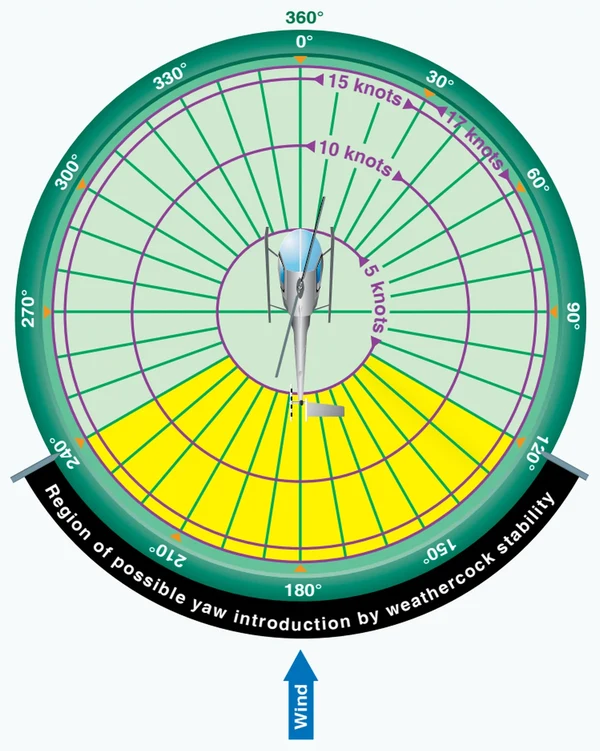
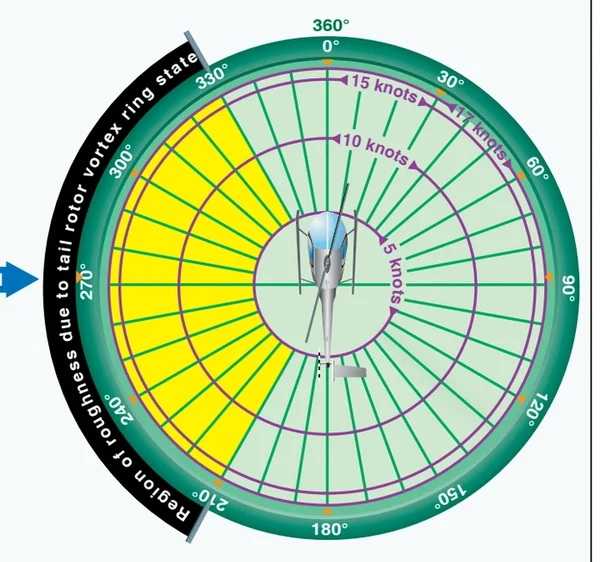
Multiengine Emergency Operations
Single-Engine Failure
- When one engine has failed, the helicopter can often maintain per altitude and airspeed until a suitable landing site can be rotor selected.
- Whether or not this is possible becomes a function (2,100 of such combined variables as aircraft weight, density rotor. altitude, height above ground, airspeed, phase of flight, vibration and single-engine capability.
- Environmental response time and and control technique may be additional factors.
- Caution driveline must be exercised to correctly identify the malfunctioning through engine since there is no telltale yawing as occurs in most multiengine airplanes.
- Shutting down the wrong engine could be disastrous! range Even when flying multiengine powered helicopters, rotor rpm through must be maintained at all costs, because fuel contamination has actuators been documented as the cause for both engines failing in flight. pilot by
Dual-Engine Failure
- a 6:1 The flight characteristics and the required crew member rotation control responses after a dual-engine failure are similar to main those during a normal power-on descent.
- Full control of the would helicopter can be maintained during autorotational descent. very In autorotation, as airspeed increases above 70-80 KIAS, the work rate of descent and glide distance increase significantly.
- As of airspeed decreases below approximately 60 KIAS, the rate engine of descent increases and glide distance decreases. magneto mixture.
Lost Procedures
- as Pilots become lost while flying for a variety of reasons, such engine as disorientation, flying over unfamiliar territory, or visibility common that is low enough to render familiar terrain unfamiliar.
- When for a pilot becomes lost, the first order of business is to fly the be aircraft; the second is to implement lost procedures.
- Keep damaged in mind that the pilot workload will be high, and increased concentration will be necessary.
- If lost, always remember to look for the practically invisible hazards, such as wires, by searching for their support structures, such as poles or towers, main which are almost always near roads. mounted If lost, follow common sense procedures. and • Try to locate any large landmarks, such as lakes, rivers, then towers, railroad tracks, or Interstate highways.
- If a landmark is recognized, use it to find the helicopter's location on the sectional chart.
- If flying near a town or city, a pilot may be able to read the name of the town on a water tower or even land to ask for directions. record • If no town or city is nearby, the first thing a pilot should track do is climb.
- An increase in altitude increases radio and years navigation reception range as well as radar coverage. and • Navigation aids, dead reckoning, and pilotage are skills that can be used as well.
- • Do not forget air traffic control (ATC) - controllers assist pilots in many ways, including finding a lost helicopter.
- Once communication with ATC has been established, follow their instructions.
- If These common-sense procedures can be easily remembered by using the four Cs: Climb, Communicate, Confess, and Comply.
- • Climb for a better view, improved communication and navigation reception, and terrain avoidance.
- • Communicate by calling the nearest flight service station (FSS)/automated flight service station (AFSS) on 122.2 megahertz (MHz).
- If the FSS/AFSS does not respond, call the nearest control tower, center, or approach control.
- For frequencies, check the chart in the vicinity of the last known position.
- If that fails, switch to the emergency radio frequency (121.5 MHz) and transponder code (7700).
- • Report the lost situation to ATC and request help.
- • Comply with controller instructions. in Pilots should understand the services provided by ATC and the resources and options available.
- These services enable pilots to focus on aircraft control and help them make better decisions in a time of stress.
- When contacting ATC, pilots should provide as much information as possible because ATC uses the information to determine what kind of assistance it can provide with available assets and capabilities.
- Information requirements vary depending on the existing situation, but at a minimum a pilot should provide the following information:
- • Aircraft identification and type • Nature of the emergency • Aviator's desires To reduce the chances of getting lost in the first place, use flight following through active contact with an aircraft during flight either by radio or through automated flight following systems when it is available, monitor checkpoints no more than 25 miles apart, keep navigation aids such as Very High-Frequency Omni-Directional Range (VOR) tuned in, and maintain good situational awareness.
- Flight following provides ongoing surveillance information to assist pilots in avoiding collisions with other aircraft.
- Getting lost is a potentially dangerous situation for any is aircraft, especially when low on fuel.
- Due to the helicopter's unique ability to land almost anywhere, pilots have more flexibility than other aircraft as to landing site.
- An inherent risk associated with being lost is waiting too long to land in a safe area.
- Helicopter pilots should land before fuel exhaustion occurs because maneuvering with low fuel levels could cause the engine to stop due to fuel starvation as fuel sloshes or flows away from the pickup port in the tank. lost and low on fuel, it is advisable to make a precautionary landing.
- Preferably, land near a road or in an area that would allow space for another helicopter to safely land and provide assistance.
- Having fuel delivered is a minor inconvenience when compared to having an accident.
- Once on the ground, pilots may seek assistance.
VFR Flight into Instrument Meteorological Conditions
- Helicopters, unlike airplanes, generally operate under Visual Flight Rules (VFR) and require pilots to maintain aircraft control by visual cues.
- However, when unforecast weather leads to degraded visibility, the pilot may be at increased risk of Inadvertent flight into Instrument Meteorological Conditions (IIMC).
- During an IIMC encounter, the pilot may be unprepared for the loss of visual reference, resulting a reduced ability to continue safe flight.
- IIMC is a lifethreatening emergency for any pilot.
- To capture these IIMC events, the Commercial Aviation Safety Team (CAST) and International Civil Aviation Organization (ICAO) Common Taxonomy Team (CICTT) categorizes this occurrence as Unintended flight in Instrument Meteorological Conditions (UIMC).
- This term is also recognized by the National Transportation Safety Board (NTSB) and Federal Aviation Administration (FAA).
- It is used to classify occurrences (accidents and incidents) at a high level to improve the capacity to focus on common safety issues and complete analysis of the data in support of safety initiatives.
- The onset of IIMC may occur gradually or suddenly, has no simple procedural exit, and is unlike flight training by reference to while in Visual Meteorological Conditions (VMC).
- Most training helicopters are not equipped or certified to fly under Instrument Flight Rules (IFR).
- Therefore, General Aviation (GA) helicopter pilots may not have the benefit of flight in actual Instrument Meteorological Conditions (IMC) during their flight training.
- Helicopter pilots that encounter IIMC may experience physiological illusions which can lead to spatial disorientation and loss of aircraft control.
- Even with some instrument training, many available and accessible helicopters are not equipped with the proper augmented safety systems or autopilots, which would significantly aid in helicopter control during an IIMC emergency.
- The need to use outside visual references natural for helicopter pilots because much of their flight training is based upon visual cues, not on flight instruments.
- This primacy can only be overcome through significant instrument training.
- Additionally, instrument flight may be intimidating to some and too costly for others.
- As a many helicopter pilots choose not to seek an instrument rating.
- While commercial helicopter operators often prefer pilots to be instrument rated, fatal accidents still occur a result of IIMC.
- Many accidents can be traced back the pilot's inability to recover the helicopter after is encountered, even with adequate equipment Therefore, whether instrument rated or not, all pilots understand that avoiding IIMC is critical.
- A good practice for any flight is to set and use minimums, which should be more conservative than required by regulations for VFR flight.
- In addition, a preflight and understanding of weather conditions that contribute to the risk of IMC developing along a route of flight is essential for safety.
- Pilots should recognize deteriorating weather conditions so the route of flight changed or a decision made to terminate the flight and land at a suitable area, well before IIMC occurs.
- If conditions deteriorate below the pilot's personal minimums during flight, a pilot who understands the risks of knows that he or she is at an en route decision point, it is necessary to either turn back to the departure point immediately land somewhere safe to wait until the has cleared.
- Pilots should recognize that descent below predetermined minimum altitude above ground level (for example, 500 feet AGL) to avoid clouds or, the helicopter to a predetermined minimum airspeed example, slowing to 50 KIAS) to reduce the rate of from the deteriorating weather conditions, indicates decision point had been reached.
- Ceilings that are lower reported and/or deteriorating visibility along the route flight should trigger the decision to discontinue and the current route to avoid IIMC.
- If the helicopter pilot is instrument rated, it is advisable maintain instrument currency and proficiency as this aid the pilot in a safe recovery from IIMC.
- A consideration for instrument rated pilots when planning a VFR should include a review of published instrument charts safe operating altitudes, e.g. minimum safe altitude minimum obstruction clearance altitude (MOCA), minimum in VMC throughout a flight: off-route altitude (MORA), etc. If IIMC occurs, the pilot may consider a climb to a altitude.
- Once the helicopter is stabilized, the pilot declare an emergency with air traffic control (ATC). imperative that the pilot commit to controlling the helicopter and remember to aviate, navigate, and finally communicate.
- Often communication is attempted first, as it is natural look for help in stressful situations.
- This may distract pilot from maintaining control of the helicopter. result, If the pilot is not instrument rated, instrument current nor proficient, or is flying a non-IFR equipped helicopter, remaining in VMC is paramount.
- Pilots who are not trained their or proficient in flight solely by reference to instruments have as a tendency to attempt to maintain flight by visual ground to reference, which tends to result in flying at lower altitudes, IIMC just above the trees or by following roads.
- The thought process installed. is that, "as long as I can see what is below me, I can continue should to my intended destination." Experience and statistical data indicate that attempting to continue VFR flight into IMC can often lead to a fatal outcome as pilots often fixate on what personal they see below them and are unable to see the hazards ahead those of them (e.g., power lines, towers, rising terrain, etc.).
- By thorough the time the pilot sees the hazard, it is either too late to avoid may a collision, or while successfully maneuvering to avoid an planned obstacle, the pilot becomes disoriented. can be Flying at night involves even more conservative personal safely minimums to ensure safety and avoidance of IIMC than weather daytime flying.
- At night, deteriorating weather conditions may be difficult to detect.
- Therefore, pilots should ensure IIMC that they not only receive a thorough weather briefing, but where that they remain vigilant for unforecasted weather during or their flight.
- The planned route should include preselected weather landing sites that will provide options to the pilot in the a event a precautionary landing is required to avoid adverse (AGL) weather conditions.
- As a pilot gains night flight experience slowing their ability to assess weather during a flight will improve. (for closure Below are some basic guidelines to assist a pilot to remain the in VMC throughout a flight: than 1.
- Slowly turn around if threatened by deteriorating of visual cues and proceed back to VMC or to the first amend safe landing area if the weather ahead becomes questionable.
- Remember that prevention is paramount.
- 2.
- Do not proceed further on a course when the terrain to ahead is not clearly discernible. may 3.
- Delay or consider cancelling the flight if weather flight conditions are already questionable, could deteriorate for significantly based on forecasts, or if you are uncertain (MSA), whether the flight can be conducted safely.
- Often, a gut feeling can provide a warning that unreasonable risks are present. safe 4.
- Always have a safe landing area (such as large open should areas or airports) in mind for every route of flight.
- It is There are five basic steps that every pilot should be familiar with, and which should be executed immediately at the onset to of IIMC, if applicable.
- However, remember that if you are the not trained to execute the following maneuvers solely by reference to instruments, or your aircraft is not equipped with such instruments, this guidance may be less beneficial to you and loss of helicopter control may occur:
- 1.
- Level the "wings" - level the bank angle using the attitude indicator.
- 2.
- Attitude - set a climb attitude that achieves a safe climb speed appropriate to your type of helicopter.
- This is often no more than 10° of pitch up on the attitude indicator.
- 3.
- Airspeed - verify that the attitude selected has achieved the desired airspeed.
- It is critical to recognize that slower airspeeds, closer to effective translational lift, may require large control inputs and will decrease stability, making recover impossible while in UIMC (Unintended Instrument Meteorological Conditions).
- 4.
- Power - adjust to a climb power setting relative to the desired airspeed.
- This should be executed concurrent with steps 2 and 3.
- 5.
- Heading and Trim - pick a heading known to be free of obstacles and maintain it.
- This will likely be the heading you were already on, which was planned and briefed.
- Set the heading bug, if installed, to avoid overcontrolling your bank.
- Maintain coordinated flight so that an unusual attitude will not develop.
- Try to avoid immediately turning 180°.
- Turning around is not always the safest route and executing a turn immediately after UIMC may lead to spatial disorientation.
- If a 180° turn is the safest option, first note the heading you are on then begin the turn to the reciprocal heading, but only after stable flight is achieved (items 1 through 5 above) and maintain a constant rate of turn appropriate to the selected airspeed.
- Each encounter with UIMC is unique, and no single procedure can ensure a safe outcome.
- Considerations in determining the best course of action upon encountering UIMC should include, at a minimum, terrain, obstructions, freezing levels, aircraft performance and limitations, and availability of ATC services.
- There are new technologies being developed regarding aircraft design, enhanced and lower-cost technologies, and aircraft certification.
- Because of this promising future, much of the discussion and guidance in this chapter may one day become irrelevant.
- As helicopters integrate more into the National Airspace System, the IFR infrastructure and instrument training will become more prevalent.
- In the future, UIMC may no longer be the emergency that ends with a fatality but rather associated with proper prevention, skilled recovery techniques along with the aid of emerging new life saving avionics technology.
- A helicopter instrument rating may be a life-saving addition to a pilot's level of certification.
- Please refer to the Instrument Flying Handbook (FAA-H-8083-15, as revised); Advanced Avionics Handbook (FAA-H-8083-6, as revised); and the Pilot's Handbook of Aeronautical Knowledge (FAA-H-8083-25, as revised) for further exploration of IFR operations and how to obtain an instrument rating.
- When faced with deteriorating weather, planning and prevention, not recovery, are the best strategies to eliminate UIMC-related accidents and fatalities.
Emergency Equipment and Survival Gear
- Both Canada and Alaska require pilots to carry gear.
- Always carry survival gear when flying over and desolate terrain.
- The items suggested in Figure are both weather and terrain dependent.
- The pilot also to consider how much storage space the helicopter has how the equipment being carried affects the overall and balance of the helicopter.
Chapter Summary
- Emergencies should always be anticipated.
- Knowledge of the helicopter, possible malfunctions and failures, methods of recovery can help the pilot avoid accidents be a safer pilot.
- Helicopter pilots should always expect worse hazards and possible aerodynamic effects and plan a safe exit path or procedure to compensate for the survival rugged 11-12 needs and weight and and the for hazard.
- []

